Genome of fiercely protective Fonni’s Dog reflects human history of Sardinia.

Appeared in Eurekalert.org  original article by GENETICS October 1, 2016 vol. 204 no. 2 737-755 .

Unique island guardian bred for behavior, not looks, meets genetic definition of true breed.
GENETICS SOCIETY OF AMERICA

fonni-dog

Photo by Stefano Marelli


The Fonni’s Dog (Cane Fonnese or Sardinian Sheepdog) is endemic to Sardinia and is known for its fiercely protective guarding behaviors.
A genomic analysis of 28 dog breeds has traced the genetic history of the remarkable Fonni’s Dog, a herd guardian endemic to the Mediterranean island of Sardinia. The results, published in the journal GENETICS, reveal that the regional variety has developed into a true breed through unregulated selection for its distinctive behavior, and that its ancestors came from the very same geographic areas as Sardinia’s human migrants. Just as Sardinian people have long provided a wealth of genetic insights to scientists, the canine natives are an example of an isolated population that could prove a powerful resource for finding genes that influence health and behavior.
Fonni’s Dogs (Cane Fonnese in Italian) are large, rugged dogs known for their wariness towards strangers and their intense facial expression. Although there are descriptions of these shephard’s companions dating to at least the mid-nineteenth century, it is not officially recognized as a breed by most international registries, including the largest federation of kennel clubs, the Federation Cynologique Internationale.
“If you were to look at ten Fonni’s Dogs, you would see there’s a lot of variation in coat color and fur length. But they are all good protectors of their flocks. That’s because nobody cares what they look like; they’ve been bred to do a job and to do it right,” says study leader Elaine Ostrander of the National Human Genome Research Institute (NHGRI).
That job is guarding the possessions of their owner, to whom they are fiercely loyal. “Fonni’s are also outstanding thieves,” says Ostrander. “They can be trained to sneak over to the neighbors’ and bring items home.” While this particular duty isn’t required by today’s Fonni Dogs, written records from the mid-1800’s indicate that thievery was part of their historical repertoire.
The island home of the Fonni’s Dog has long held the interest of geneticists. Because Sardinia is geographically isolated, its human inhabitants share a unique ancestry and relatively low genetic diversity. Those characteristics make it easier to study genetic influences on disease and aging in Sardinians than in other human groups. Ostrander and other canine geneticists argue that each of the hundreds of different dog breeds also represents an isolated population that could be harnessed for genetic studies.
“Dogs get all the same diseases as humans, and there are lots of dog breeds with genetic predispositions, for example to particular types of cancer,” Ostrander says. “Once we understand the genetic history of a breed we can search for disease genes in a much more powerful way than is possible in humans, enabling us to hone in on medically-relevant genes.”
To better understand how the Fonni’s Dog developed, scientists from the NHGRI, the University of Milan, and G. d’Annunzio University analyzed blood samples from Fonni’s Dogs living in different parts of Sardinia and sequenced the whole genome of one of these dogs. To trace the Fonni’s relationship to dogs from around the Mediterranean, the team compared the data to DNA from 27 other European, Middle Eastern, and North African breeds.


fonni-dog-2
photo by Luca Spennacchio


Smooth-coated (left) and rough-coated (right) varieties of Fonni’s Dog. Genetic analysis confirms the varied appearance of the Fonni’s Dog masks the underlying unity of the breed.

The data revealed that the Fonni’s dog shows all the genetic hallmarks of being a breed, even though it developed in the absence of a regulated pedigree program and only arose through the tendency of Sardinian shepherds to choose their best guard dogs for breeding. The researchers compared individual dogs from within the same breed and across different breeds, quantifying many aspects of genome variation and genetic distinctiveness. All these measures confirmed that the Fonni’s Dog, in genetic terms, is a breed.
The study also revealed the ancestors of the Fonni’s Dog were related to the Saluki, a swift and graceful “sight” hound from the Near and Middle East, and a large mastiff like the Komondor, a powerfully-built sheep guardian from Hungary that looks a bit like a mop.
Strikingly, the origins of the Fonni’s Dog mirror human migration to Sardinia. Studies of the island’s human inhabitants have shown they share greatest genetic similarity with people from Hungary, Egypt, Israel, and Jordan. “The map we can draw of the dog’s origins is the same as the map of human migration to Sardinia,” says Ostrander. “Clearly ancient people traveled with their dogs, just as they do now.”
The close parallels between the history of the dog and human inhabitants of the island has a practical implication, says Ostrander. “Our study shows how closely dog migration parallels human migration. It could be that if you have missing pieces in a study of a human population’s history, samples collected from dogs in the right place could fill in those gaps.”

dog-graphic

This diagram indicates the geographic origin of the 28 dog breeds studied. Abbreviations: Anatolian Shepherd, ANAT; Azwahk Hound, AZWK; Berger Picard, BPIC; Bouvier des Flandres, BOUV; Cane Corso, CANE; Cane Paratore, CPAT; Cirneco dell’Etna, CIRN; Fonni’s Dog, FONN; Great Pyrenees, GPYR; Ibizan Hound, IBIZ; Istrian Shorthaired Hound, ISHH; Italian Greyhound, ITGY; Komondor, KOMO; Lagotto Romagnolo, LAGO; Levriero Meridionale, LVMD; Maltese, MALT; Mastino Abruzzese, MAAB; Neapolitan Mastiff, NEAP; Pharaoh Hound, PHAR; Portuguese Water Dog, PTWD; Saluki, SALU; Sloughi, SLOU; Spanish Galgo, GALG; Spanish Water Dog, SPWD; Spinone Italiano, SPIN; Standard Schnauzer, SSNZ; St Bernard, STBD; Volpino Italiano, VPIN.

Credit

Dreger et al. 2016 DOI: 10.1534/genetics.116.192427

The team plans next to study in greater detail eleven regions of the genome that likely make the Fonni’s Dog distinct — these may be responsible for their characteristically loyal and protective behavior.
Ostrander points out the study was a collaborative effort with scientists from Italy, including Sardinia, and says she is gratified to find so many researchers across the world interested in similar questions. Her group is hoping to work with colleagues in a range of countries to explore other so-called “niche” dog populations, regional varieties that often have a history of being bred for a particular job. Their goals are to better understand how dogs have evolved and to demonstrate yet another important job for these faithful human companions: tracking down disease genes.
###

CITATION
Commonalities in Development of Pure Breeds and Population Isolates Revealed in the Genome of the Sardinian Fonni’s Dog
Dayna L. Dreger, Brian W. Davis, Raffaella Cocco, Sara Sechi, Alessandro Di Cerbo, Heidi G. Parker, Michele Polli, Stefano P. Marelli, Paola Crepaldi, Elaine A. Ostrander
GENETICS October 1, 2016 vol. 204 no. 2 737-755;
http://www.genetics.org/content/204/2/737
DOI: 10.1534/genetics.116.192427
Appeared in Eurekalert.org

Sardinia’s Mediterranean diet: 10 foods that may lengthen your life

From “Today” online magazine part of NBC News  , Apr. 9, 2015 .

In the book “The Blue Zones Solution: Eating and Living Like the World’s Healthiest People,” author Dan Buettner reveals what the people around the world who live the longest are more likely to eat.One of the keys to longevity? Wine, beans and family: Sardinia’s secrets to living to 100.

A plant-based diet, says Buettner and colleague Gianni Pes, a senior researcher at the University of Sassari, Italy. They share the foods that make up the regular diet of the people of Sardinia, Italy, one of the “Blue Zones” — areas around the world where people are more likely to live to 100.

Try the healthy minestrone soup that could help you live to 100!

1. Goat’s milk and sheep’s milk

goatmilk_living_to_100-streams_desktop_large_bfba4aef9c064431ff60512bba339b98.today-inline-large


Both have higher nutri­tional value and are more easily digested than cow’s milk.

A recent study in the European Journal of Clinical Nutrition showed that both sheep’s milk and goat’s milk lower bad cholesterol, are anti-inflammatory, and may protect against cardiovascular disease and colon cancer. The higher calcium and phosphorus content of goat’s milk may have helped peo­ple living in the Sardinian “Blue Zone” preserve their bone density and consequently lower their risk of fractures.

Goat’s milk is also rich in zinc and selenium, which are essential for optimal immune system activity and to promote healthy aging. The sharp pecorino cheese made from fermented sheep’s milk in Sardinia is particularly interesting. Because of its rich flavor, it can be used sparingly in pastas, soups, and grated over vegetables.

Since pecorino is made from the milk of grass-fed sheep, it has high levels of omega-3 fatty acids.

 2. Flat bread (carta di musica)

flatbread_living_to_100-streams_desktop_large_78462f4e27415315ab93da4d02913b87.today-inline-large


The most common bread consumed by Sardinian shepherds is a dry, flat bread made of high-protein, low-gluten Triticum durum wheat (the main ingredient in Italian pasta).

 High in fiber and complex carbohydrates, it does not cause a sugar spike in blood like processed or refined grains do and it’s easier on the pancreas, lowering the risk for type 2 diabetes.

Its name comes from the observation that it is flat and thin, like music paper. Another traditional flat bread is pane carasau. This thin, flat bread made of durum wheat flour, salt, yeast, and water was invented for shepherds, who pastured their sheep for months at a time. It can last up to a year.

Whole durum wheat has a low- to medium-glycemic score, and so it doesn’t spike blood sugar. It also contains only a fraction of the gluten that white bread does.

 3. Barley   

Ground into flour or added to soups, barley was found to be the food most highly associated with living to 100 among Sardinian men. Barley bread (orgiathu) was favored by shepherds because of its long shelf life and looked much like a regular loaf of bread but was made of ground barley. This bread has a much lower glycemic index than wheat bread, meaning it increases blood glucose more slowly than wheat bread does and thus puts less stress on the pancreas and kidneys.

We don’t know if it does that because of barley’s high protein, magnesium, and fiber content (much higher than oatmeal) or because it was pushing other less healthy foods (such as white wheat flour) out of the diet. Ironically, barley was considered a poor man’s food until recently, when it has made a comeback in Sardinian haute cuisine.

 4. Sourdough bread (moddizzosu)

sourdough_living_to_100-streams_desktop_large_b5bef757c00509aff3c515337e00aac1.today-inline-large


Much like sourdough bread in the United States, Sardinian sourdough breads are made from whole wheat and use live lactobacilli (rather than yeast) to rise the dough. This process also converts sugars and gluten into lactic acid, lowering the bread’s glycemic index and imparting a pleasant, faintly sour taste.

Pes has demonstrated that this type of bread is able to lower the glycemic load, reducing after-meal glucose and insulin blood levels by 25 percent. This helps protect the pancreas and may help prevent obesity and diabetes.

4. Fennel

fennel_living_to_100-streams_desktop_large_f4b43ba562ca3a841afc8cbc0095bde3.today-inline-large

Fennel’s licorice taste flavors several Sardinian dishes. It’s used as a vegetable (the bulb), as an herb (its willowy fronds), and as a spice (its seeds). Rich in fiber and soluble vitamins such as A, B, and C. It’s also a good diuretic; therefore, it helps to maintain the blood pressure low.

 6. Fava beans and chickpeas

Eaten in soups and stews, fava beans and chickpeas play an important part in the Sardinian diet, delivering protein and fiber. They are one of the foods most highly associated with reaching age 100.

 7. Tomatoes

tomatoes_living_to_100-streams_desktop_large_4d97f283d0e1f78803990eec1fae8041.today-inline-large


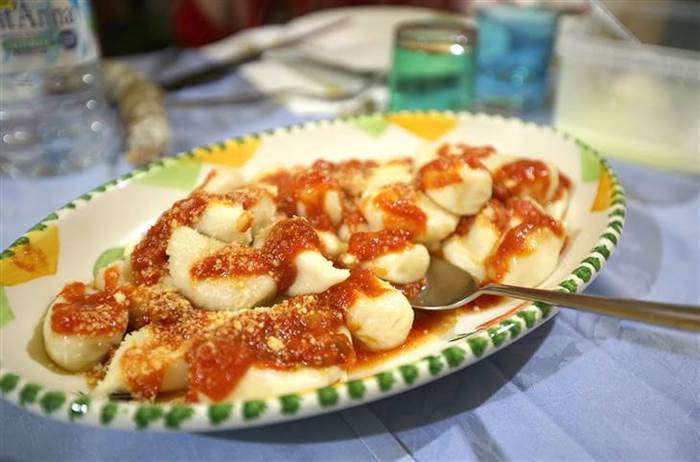
Sardinian tomato sauce tops breads and pizzas and is the base for several pasta dishes. Tomatoes are a rich source of vitamin C and potassium. Cooking tomatoes breaks down their cell walls, making lycopene and other antioxidants more available.

The Sardinian custom of coupling olive oil with tomatoes (either driz­zling it over raw tomatoes or using it to make sauces) further increases the body’s ability to absorb nutrients and antioxidants.

8. Almonds

Almonds, associated with Mediterranean cooking, appear regularly in Sardinian cooking, eaten alone, chopped into main dishes, or ground into a paste for desserts. One study showed that almonds included in a low-calorie diet helped people lose more weight and belly fat while they experienced an increase in protective high-density lipoprotein (HDL) cholesterol and a drop in systolic blood pressure (the bottom number).

9. Milk thistle

Sardinians drink a tea of milk thistle, a native wild plant, to, as locals believe, “cleanse the liver.”

Emerging research suggests that the milk thistle’s main active ingredient, silymarin, is an antioxidant and has anti-inflammatory benefits. It can be found in American health food stories as an ingredient in some herbal teas.

10. Cannonau wine

 Sardinia’s distinctive garnet red Cannonau wine is made from the sun-stressed Grenache grape.

living_to_100-streams_desktop_large_971a7d0a22565f5ce9fa4e45a21598a1.today-inline-large


Sardinians drink three to four small (3-ounce) glasses of wine a day on average, spread out between breakfast, lunch, dinner, and a late afternoon social hour in the village.

One might argue that the all-day small doses of this antioxidant-rich beverage could explain fewer heart attacks. Dry red wines in general offer the same health advantage.

Article and photos from Today Magazine online part of NBC NEWS  9th April 2015

info:  Book “The Blue Zones Solution: Eating and Living Like the World’s Healthiest People,” author Dan Buettner


For Valentine’s Day Gift, Forget Diamonds: Try Ichnusaite

FEB. 12, 2016, 5:12 P.M.  appeared on New York Times 12 February 2016
ichnusaite
 

Ichnusaite  Photo from The New York Times and Reuters


PARIS — Far rarer than diamonds or emeralds, some minerals on Earth are known only from thimbleful samples, according to a first list of 2,550 obscure minerals on Friday that could have future uses, ranging from industry to exotic Valentine’s Day gifts.

Ichnusaite, fingerite, amicite and nevadaite are among truly rare minerals – defined as those known to come from five or fewer places worldwide – and form only under extremely unusual conditions, the scientists wrote.

“Diamond, ruby, emerald, and other precious gems are found at numerous localities and are sold in commercial quantities, and thus are not rare” alongside those in the study, they wrote in the journal American Mineralogist.

108423_web
 

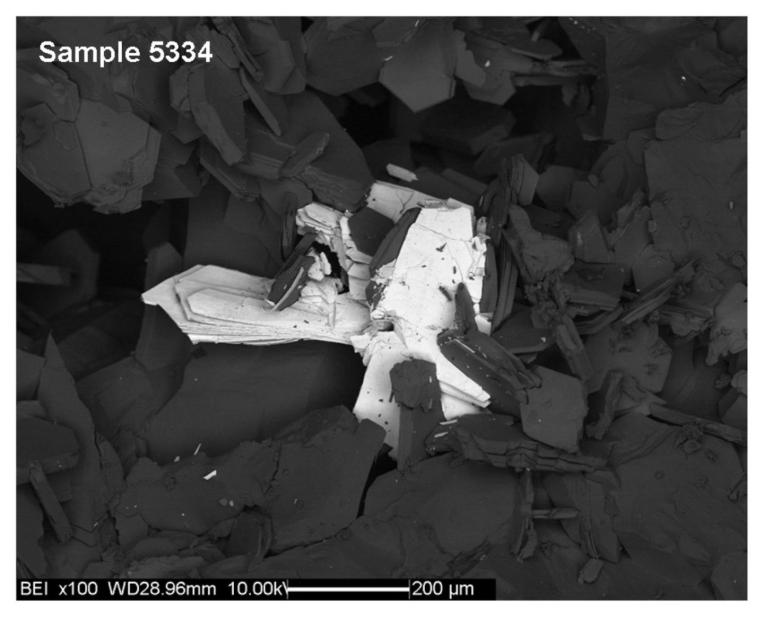
Ichnusaite Photo by  American Minarologist Paolo Biagioni


“If you wanted to give your fiancee a really rare ring, forget diamond. Give her Sardinian ichnusaite,” Robert Hazen, a co-author of the study at the Carnegie Institution, wrote in a statement.

Ichnusaite forms from thorium and lead-like molybdenum and only one tiny whitish crystal has ever been found, in Sardinia.  “Some of the other rare minerals are also only known from a thimbleful,” he told Reuters.

Of 5,090 minerals known worldwide, fewer than 100 make up 99 percent of the Earth’s crust. Most are from common elements such as oxygen, silicon and aluminum.

Some of the 2,550 rare minerals defined in the study might have commercial properties, from electronics to batteries, if they could be manufactured, the authors said.

Laser pointers, for instance, used to require rubies, but the rubies are now commercially manufactured. Artificial diamonds are also widely used, from industry to jewels.

The authors said some of the rare minerals required exact temperatures to grow, others formed only with rare elements, others can dissolve easily, or only occur in dangerous locations such as in volcanoes.

“They form in a perfect storm of conditions,” Jesse Ausubel, co-author at the Rockefeller University, told Reuters.

The authors estimated 1,500 types of mineral were still to be found on Earth. “There are some master jewellers who would love to work with the rare minerals tiara of the 21st century,” he said.

Reporting By Alister Doyle, editng by Larry King appeared on New York Times 12 February 2016
15suseinargiu500
 

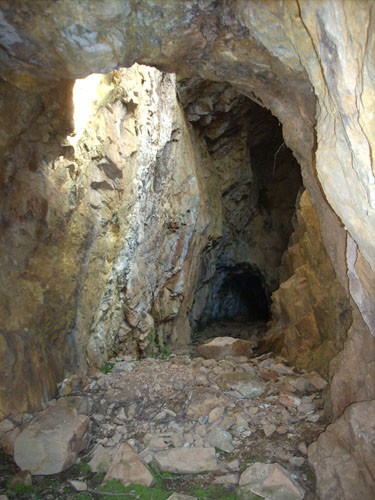
Su Seinargiu Sarroch by Mines of Sardinia site


Ichnusaite has been found only in one location in Sardinia and in the whole world: the old abandoned mine of Su Seinargiu near Sarroch in the  southern province of Cagliari.

sakanatravel.worpress.com
for more detailed information: 
http://www.minesofsardinia.com
http://www.eurekalert.org

My perfect day in Gallura, Sardinia

Susan Pinker: why face-to-face contact matters in our digital age.

In villages in Sardinia, 10 times as many men live past 100 than the average. Why? A key reason is that they are not lonely. Psychologist Susan Pinker on the importance of face-to-face contact in our era of disbanded families and virtual connections.

Susan Pinker

Friday 20 March 2015 The Guardian

Last month the Church of England asserted that a big slice of British society feels “unwanted, unvalued and unnoticed”, a view confirmed by recent population surveys. A third of British citizens over 65 now say that they have no one to turn to, and a significant swath of those under 25 say they also feel disconnected from the people around them. Has loneliness become the new normal?

As you start humming the chorus to “Eleanor Rigby”, realise this: feeling untethered is not only uncomfortable, it is bad for your health. Research shows that people who feel socially disconnected are at a greater risk of dying young – especially if they are men. Women are more prone to seek out and build longstanding, intimate personal relationships: within their extended families, through lifelong friendships, in their neighbourhoods.

That is one reason – there are others, of course – why in every industrialised country, women outlive men by an average of five to seven years. This gender imbalance is visible wherever older people spend their time; in parks, libraries, churches, community halls and seniors’ tour groups, women over the age of 60 outnumber men in their age group by three to one.

ogliastra

@Ogliastra photo the Guardian@

But this is not the case everywhere. There is one place in Europe where both sexes are living long lives. It is an area where, for better or worse, no one is left alone for very long. In what has been dubbed the Age of Loneliness, it’s worth asking what they have that we don’t.

The residents of the hilltop villages of central Sardinia are among the world’s only exceptions to the rule that women in developed nations live longer than men. Almost everywhere else, including on the Italian mainland 120 miles away, there are six female centenarians for every male. Elsewhere, most men don’t make it to 80. But once Sardinian men in this region have survived their dangerous, risk-taking adolescent and young adult years, they often live as long as their wives and sisters – well into their 90s and beyond; 10 times as many men in these villages live past the age of 100 as men who live elsewhere. Despite living hardscrabble lives as shepherds, farmers and labourers in an inhospitable environment, Sardinians who were born and live in these villages are outlasting their fellow citizens in Europe and North America by as many as two to three decades. Many of these centenarians remain active, working well into their 90s and living in their own homes, usually with the help of people they’ve known their entire lives.

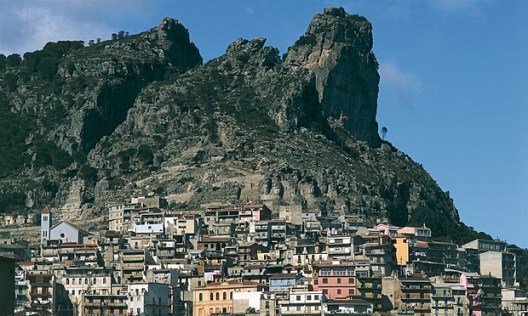
These villages comprise one of the world’s “Blue Zones” – a handful of mountainous regions where more people live to the age of 100 than anywhere else. This zone has nearly the same landmass as Switzerland but with less than a quarter of its population; just 1.5 million people live in the towns dotting the rugged shoreline and pastoral mountain villages in the Ogliastra region, the epicentre of the Sardinian Blue Zone. Centuries of invaders and regular attacks from North African pirates drove residents away from the coast inland, beyond the rugged Gennargentu mountains. This geographic isolation bonded the area’s families and communities. That is the upside. The downside is that always having to defend your boundaries created a longstanding mistrust of strangers, aptly illustrated by the local saying Furat chie benit dae su mare: those who come from the sea come to steal.

That hostility to outsiders is one reason why I flew into Alghero – a Moorish-looking seaside town with an airport and a university – instead of heading straight to the Blue Zone. I was travelling with my daughter Eva, to record the life stories of these centenarians for a radio documentary. Our first step was to meet an expert in Sardinian super-longevity, a local physician and biomedical researcher named Giovanni Pes, accompanied by a geneticist colleague, Paolo Francalacci, who told us that genes account for perhaps 25% of the variance that leads to male super-longevity in the region; culture and chance accounted for the rest.

Pes immediately included us in his lively circle of close friends, family and colleagues, and this sense of inclusion turned out to be a crucial piece of the longevity puzzle. Every centenarian we met was supported by kith and kin, visitors who stopped by to chat, bring food and gossip, provide personal care, a kiss on the cheek. Time-pressured grown-up children, grandchildren, nieces and nephews – some of them senior citizens themselves – took time off from work to look after their elderly family members.

Despite a packed clinical and research schedule, Pes told me it was normal to spend every Sunday with his mother. “Of course we have to balance our careers with family life,” he told me. “But as a Sardinian, I never forget to visit my mother. She lives 70km from me, but every week I visit her. She is 87 now but is fantastic mentally. I talk to her about my work at the university and she always gives me interesting advice.”

Advertisement

Given that his father lived to 105 and his great-uncle to 110 and that the biology of ageing has inspired his research career, Pes is well versed in the multiple conditions that foster extraordinary longevity in Sardinia: the isolated gene pool, the mountainous terrain, the local diet and red wine. But he also emphasises the buffering effect of social factors – the impact of face-to-face interaction which is so central to Sardinian village life. “Everybody is in close contact with other members of the community. My great-uncle was no exception. He used to visit friends and relatives and was fond of going hunting until he was 98 years old. And if I remember correctly, he was able to shoot a wild boar at that age.”

Caring for fragile relatives seems motivated by more than duty. Obligation is mixed with pride, a sense of ownership and identity. The contrast to how families behave elsewhere is stark. In other parts of Europe and in North America, looking after ageing family members can be seen as grunt work. Yet when I asked Maria Corrias, a woman in her 60s who lived with, and cared for, her nearly deaf, housebound, irascible, 102-year-old uncle if she felt frustrated by her situation, she became annoyed with me. “No, no! I do it with pleasure. You don’t understand. He is my heritage. The seniors of this village are our heritage. We do it with love.” I asked her 25-year-old niece, Sarah, if she would do the same for her elderly relatives when the time comes. “Certo, of course I will,” she replied. “Everybody does it.”

Our survival hinges on social interaction, and that is not only true of the murky evolutionary past. Over the last decade huge population studies have shown that social integration — the feeling of being part of a cohesive group — fosters immunity and resilience. How accepted and supported we feel affects the biological pathways that skew the genetic expression of a disease, while feeling isolated “leaves a loneliness imprint” on every cell, says the American social neuroscientist John Cacioppo. Women with breast cancer who have expansive, active, face-to-face social networks, for example, are four times as likely to survive their illness as women with sparser social connections. How might that work? Research led by Steve Cole at the University of California, Los Angeles shows that social contact switches on and off genes that regulate the rate of tumour growth (and the level of cancer-killing lymphocytes in our bloodstreams).

Fifty-year-old men with active friendships are less likely to have heart attacks than more solitary men, and people who have had a stroke are better protected from grave complications by an in-person social network than they are by medication. Working with a large British sample, the Australian researchers Catherine and Alex Haslam have found that people with active social lives recover faster after an illness than those who are solitary – their MRIs show greater tissue repair – and that older people in England who participated in social gatherings kept their memories longer.

And it’s not just about pensioners. When the daily habits of nearly 17,000 utility workers in France were monitored throughout the 1990s, researchers discovered that their degree of social involvement was a good way to predict who would still be alive at the end of the decade.

The studies on the benefits of face-to-face social contact, almost all of them published during the last decade, leave us with the question: why isn’t there more buzz about getting together? One reason is that when it comes to what drives health and happiness, we’re obsessed with more concrete concerns: food, money, exercise, drugs. We recognise that cigarettes, salt, animal fat and being overweight can shorten our lifespan, while antibiotics, physical activity and the right diet can prolong it. This knowledge has changed the way most of us eat, work and spend our leisure time. But despite evidence that confirms the transformative power of social contact, our routines have become more solitary. Since the late 80s, when social isolation was first earmarked as a risk for premature death in a landmark article in Science magazine, the number of people who say they feel isolated has doubled if not trebled, according to population surveys in Europe, the US and Australia.

The questions how and why loneliness has increased have been much debated. Communities have disbanded for a variety of reasons. And while the internet allows us to ignore geography in our search for the like-minded, it has further stripped away the need to talk to our neighbours. Most commercial and social transactions have migrated online, where they’re cheaper and quicker, and for many people, the workplace and the classroom are now virtual, too. If electronic media informs and entertain us, who needs all that forced person-to-person chit-chat?

Certainly digital computation has eclipsed raw brain power when it comes to searching, gathering and sorting information. But when it comes to relationships, our electronic devices can give us the illusion of intimacy without the hormonal rush of the real deal.

I

old women

@As old as the hills … houses in the mountains of Ogliastra, Sardinia, where centenarians live active lives. Photograph: De Agostini/Getty Images@

n 2012, the University of Wisconsin psychologist Leslie Seltzer and her team asked pre‑teen girls to solve maths and word problems in front of an audience. Before testing them, the researchers measured the participants’ salivary cortisol, a hormone that registers levels of stress. They were then divided into four groups. Each received a different type of social contact immediately after the test: one quarter of the group had a visit from their mother, one quarter got a phone call from her, one quarter an encouraging text, and one quarter had no communication at all. After the test, the cortisol levels were measured once again, along with the levels of oxytocin in the blood. The girls who saw their mothers in person became the most relaxed afterwards, as shown by the biggest drop in their cortisol levels. A spike in oxytocin, often called the “cuddle chemical”, showed they felt reassured. That phenomenon, though attenuated, was shown in girls who heard their mother’s voice on the phone. But a text from their mother had no impact. There were no physiological signs that the participants felt less anxiety than they had before. Indeed, their hormone levels were indistinguishable from the girls who had no contact at all.

Recent MRI studies led by neuroscientist Elizabeth Redcay tell us that personal contact elicits greater activity in brain areas linked to social problem-solving, attention and reward than a remote connection. When the identical information is transmitted via a recording, something gets lost.

Just as we all require food, water and sleep to survive, we all need genuine human contact. Digital devices are great for sharing information, but not great for deepening human connections and a sense of belonging. More socially cohesive societies – such as the Blue Zone of Sardinia – suggest that we should use our mobile devices to augment, not to replace, face-to-face interaction – that is, if we want to live longer, healthier and happier lives.

Britons of all ages now devote more time to digital devices and screens than to any other activity except sleeping; a lot of those hours are spent alone. No app exists that is as effective as one year with a highly trained teacher, or the cumulative effect of regular family meals spent together.

A quarter of Britons now say they feel emotionally unconnected to others, and a third do not feel connected to the wider community. If men are to live as long as women, if urbanites hope to live as long as Mediterranean village dwellers, they need to live in a place where they know and talk to their neighbours. But there is no need to trash your smartphone and move to rural Sardinia. Once you recognise that you need more than pixelated, electronic ties, and more than a handful of close friends and family to keep you healthy and happy, you can stay where you are. By cultivating a community of diverse, person-to-person relationships, you can build your own village, right where you live.

Susan Pinker’s The Village Effect: Why Face-to-Face Contact Matters is published by Atlantic.

for more info go to the original article appeared on the Guardian 20th march 2015

http://www.theguardian.com/books/2015/mar/20/secret-long-happy-life-mountain-villages-sardinia

The world’s smallest kingdom — unspoiled Tavolara

article by Laura Secorun Palet, first appeared on “USA today” 22-03-2014

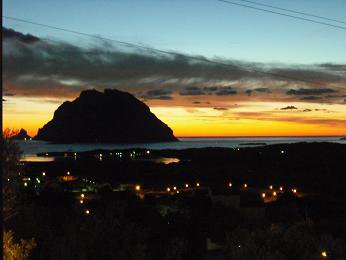
tavolara wordpress

Few places excite our collective imagination like islands. From Aldous Huxley’s portrayal of a water-locked Utopia to Daniel Defoe’s classic Robinson Crusoe, islands make us dream.

Fortunately, not all of them are imaginary. Take Tavolara, for instance: Hidden along the East coast of Sardinia, this tiny strip of land — just over three miles long and a mile wide — is one of the Mediterranean’s best kept secrets.

Only 14 people live on what looks like a mountain peak jutting from the sea. And while none of the residents are pirates or castaways, some are members of a unique royal family.

At first glance, one could mistake Antonio Bertoleoni for an ordinary fisherman, but he is, quite literally, the king of the island. “Tonnino” — as his subjects call him — is the descendant of Giuseppe Bertoleoni, a sailor from Genova who, in the late 18th century, came across this uninhabited rock, claimed it and crowned himself king.

Several years later, while on a hunting trip, King Charles Albert of Savoy is said to have recognized Giuseppe’s authority, and the family has self-proclaimed themselves royal ever since.

“We are a real royal family,” King Bertoleoni says. “Even Queen Victoria of England, when she heard of us, sent a photographer in a boat to take a picture of Tavolara’s royal family for her collection. And I think it must still be somewhere at Buckingham palace,” he adds by way of proof.

While the Bertoleoni reign only lasted a century — in 1934, Tavolara was officially annexed by Italy — the royal family still carries on its role as protector of the island by ignoring the siren call of mass tourism and chasing away speculators.

Case in point: In the 1990s a company wanted to harvest wood from Tavolara’s well-stocked forest. The timber sale would’ve been a good earner for the tiny island, which is short on natural resources it can sell. The king stuck to his guns, however, and pointed the lumberjacks back to the mainland.

Tavolara has also refused to build more houses on the beach, pave any roads and provide lodging for tourists. Unlike the tourist meccas of Mikonos or Ibiza, Tavolara is not plagued by cruise ships, nightclubs and beach vendors. Instead, visitors can chose between the following attractions: the island’s little beach bar, its only restaurant “Da Tonnino” — which is run by the king and offers the local fishermen’s catch of the day — or its long white beach with turquoise waters.

And tourists can only come for the day, taking the 15-minute ferry back to Porto San Paolo at the end of their island adventure.

Tavolara’s prettiest sight may actually be underwater. The island offers the Mediterranean’s most successful marine reserve — with the highest levels of biomass per square meter — which makes it a prime diving destination for those looking to experience the great sea like it was decades ago, before overfishing took its toll. Treats include flora, fauna and shipwrecks.

Natural marvels aside, Tavolara also has a glamorous side: For more than 20 years, the island has been home to a very special film festival. Una Notte in Italia — a night in Italy — showcases the best of contemporary Italian cinema.

Every July, yachts surround Tavolara. The beach bar orders extra bottles of champagne to quench the visitors’ thirst, and a big screen is set outdoors for the event.

The festival’s atmosphere is informal, but film stars seem happy to trade in red carpets for a walk on the beach, theaters for a screening under the stars.

To visitors, Tavolara feels like a time capsule. Because, while change can’t be fought, it seems the islanders have found a way to slow it down – just enough to protect their corner of paradise from the claws of globalization.

“I think this island is perfect as it is,” says King Bertoleoni, “So it should stay the same in the future. Sometimes by trying to improve things, but we just make them worse.”

Seeing the children jump off the peer as the sun sets behind the sand dunes, it is hard to disagree with his Majesty.

Sakanatravel

sakanatravel@yahoo.com

The Sardinian Literary Spring: An Overview. A New Perspective on Italian Literature by Michele Broccia

The Sardinian Literary Spring: An Overview. A New Perspective on Italian Literature by Michele Broccia, as appeared on the Nordicum Mediterraneum Icelandic E-Journal of Nordic and Mediterranean Studies Vol.9 n.1 2014.

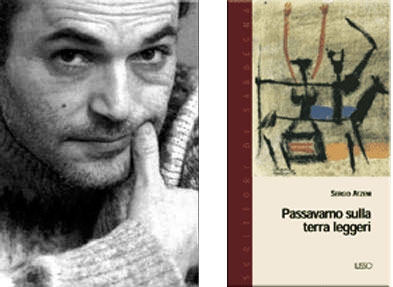
sergio atzeni

Sergio Atzeni

This article aims at presenting today’s Sardinian literary scene and how some novelists (Sergio Atzeni, Giulio Angioni, Salvatore Mannuzzu, Salvatore Niffoi, Marcello Fois, Giorgio Todde, Milena Agus, Francesco Abate, Flavio Soriga and Michela Murgia), during the last few decades, drawing their narrative subjects directly from the regional and local culture, are contributing to a new development in Italian literature. These authors’ novels often contain references to Sardinian linguistic, social, anthropological and historical facts. Their success has led literary critics to talk about a Sardinian Literary Spring or Sardinian Nouvelle Vague, i.e. a literary phenomenon, which is the expression of a deep-rooted Sardinian identity.

sardinia blues

1. Introduction

This article aims at presenting today’s literary scene in Sardinia and how some novelists, during the last few decades, drawing their narrative subjects directly from the regional and local culture, are contributing to a new development in Italian literature. These authors’ novels very often contain references to Sardinian linguistic, social, anthropological, and historical facts, which can help to understand why readers find these works interesting. The attitude towards regional literatures, including minority languages or dialects, has changed over the past decades. On the one hand we have those who support a national, centralised literature based on the Italian language; on the other those who, on the contrary, show the polycentric character of Italian literature, with its local and regional traditions. Although the latter point of view can already be found in Carlo Dionisotti’s Geografia e storia della letteratura italiana[1] (Geography and History of Italian Literature, 1967) as well as in Walter Binni and Natalino Sapegno’s Storia letteraria delle regioni d’Italia[2] (A Literary History of Italian Regions, 1968), which date back to the 1960s, this approach has recently been confirmed in Alberto Asor Rosa’s Letteratura Italiana (Italian Literature, 1989). This work dedicates a volume to the literature of each Italian region, among which one can find that of Sardinia, written by Giovanni Pirodda[3]. Understanding literature also means to know and to comprehend the culture and language(s) that lie behind or underneath any particular work.

The fact that Sardinian people have started appreciating and studying their own history, their culture, traditions and languages, but also making them known through books, films and festivals to people outside the island, can partly explain these writers’ success. When in a region, in a relatively short period, new museums are opened, frequent cultural or literary festivals are held, different novels are published every year, and new films are directed, one realises something novel is taking place. An important role can be attributed to the cultural policy of the Sardinian local government, which promulgated two laws financing the publishing sector. The first law, enacted in 1952, helped many publishers to start their activity. More recently, in 1998 a new bill supported publishers to print new books by buying a certain number of copies that are then distributed to schools and libraries. Events such as the “Literary Festival of Gavoi”, to mention one among others, held every year in July since 2003, which lasts three days, hosts famous writers and attracts thousands of people not only from the island, witness to the widespread interest in Sardinian literature. Recently Sardinian directors such as Salvatore Mereu with Bellas mariposas, based on Sergio Atzeni’s novel, or Giovanni Columbu with Su Re, where local actors, local settings and the Sardinian language are used, have represented a new way of making cinema. In some cases, directors such as Mereu and Columbu, the former withSonetaula (1960) by Giuseppe Fiori and Bellas Mariposas (Beautiful Butterflies 1996) by Sergio Atzeni and, the latter, with Arcipelaghi (Archipelagos 1995) by Maria Giacobbe, have chosen Sardinian novels as their raw material, thus also contributing to the novels’ success. This new vitality in the arts has attracted mainstream Italian critics’ and media attention. Giacomo Mameli, a journalist, writer and critic, has talked about a Sardinian “Literary Spring… “an extraordinary phase for culture, from literature to cinema.”[4]

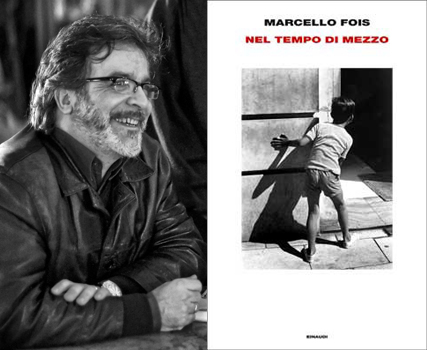
MarcelloFois-Neltempodimezzo

2. Sardinian Literature

Sardinia has always had its own literature, which goes back as far as the 11th century. An example of it is the so called “condaghes”, i.e.“a word which derives from the Greek ‘“kontaki”’, which indicated […] a donation in favour of the church”[5]. Although they have a philological value, the importance of “condaghes” lies in the fact that they represent the first expression of Sardinian literature. Il Condaghe di San Pietro di Silki (The Condaghe of Saint Peter of Silki) is most interesting when, with the description of a woman’s behavior, it is reminiscent of Boccaccio’s later tales. In the past the main references to study the literary production of the island were Siotto Pintor’s Storia della letteratura della Sardegna[6] (History of the Literature of Sardinia, 1843) and Alberto Alziator’s Storia della letteratura di Sardegna (History of the Literature of Sardinia), published in 1954. In 1989 Giovanni Pirodda edited the volume on the history of Sardinian literature, where he supplies an anthology of the most representative writers or works from the 11th century to 1990[7]. In the introduction to his volume he justifies his choice to study a regional literature with these words:


Sardinia, both due to its insularity, and above all because it was alternatively influenced, each time with deep repercussions, by different dominant cultures (at first Pisan and Genoese, then Catalan and Spanish, and finally Piedmontese and Italian) can be integrated with difficulty in a unitary project […] of the cultural history of the [Italian] peninsula.

On the same page he explains how “the knowledge of Sardinian literary events can give a contribute to the reconstruction of an identity”, and how it is important to consider history from a peripheral point of view in an attempt to “overcome and modify history, traditionally seen from the centre.”[8]

Pirodda’s work, being inserted in a wider history of Italian literature, is extremely important because it instils new life into a different attitude towards regional literatures, which are often considered of secondary importance: “The vision of a history of the Italian literature as a monolithic reality is no longer tenable.”[9] On the contrary, for a better understanding of the history and culture of the peoples that inhabit Italy, one needs to read those authors that give voice to peripheral cultures and languages. Experimentation in language(s) and mixing of languages seem to be a feature of contemporary Italian literature and this is particularly true for the island of Sardinia, whose literary tradition has produced works in at least five different languages: Latin, Sardinian, Italian, Catalan and Spanish. Today, overlooking the importance of this multilingual wealth is not considered perhaps the best approach. It would mean being tied to critical perspectives that belong to the 18th and 19th centuries. This change is even more significant when the role that Sardinian writers have gained in the Italian literary scene in the last few decades is taken into consideration.

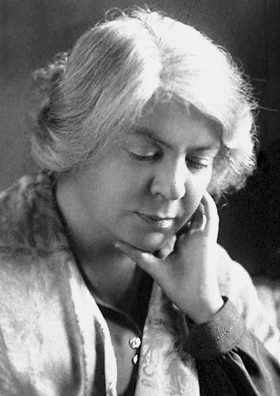
The interest in contemporary Sardinian writers should not make us forget the enormous success enjoyed in the last century by Sardinian writers such as Grazia Deledda, Antonio Gramsci, Salvatore Satta, Gavino Ledda and Giuseppe Dessì. Grazia Deledda wrote novels dealing with Sardinian ancestral people and their destinies, which seem to be set in a primeval world. Novels such as Elias Portolu (1900), Cenere (Ashes, 1903), Canne al vento (Reeds in the Wind, 1913), and La Madre (The Mother, 1920), led her to become the first Italian woman to receive the Nobel Prize for Literature in 1926. Antonio Gramsci, thanks to his literary as well as political works, became one of the most important figures of 20th-century Italy. Other writers whose achievements became renowned beyond the island were Giuseppe Dessì’s Paese d’ombre (Village of Shadows, 1972), Gavino Ledda’s Padre Padrone: l’educazione di un pastore (My Father, my Father, 1975), and Salvatore Satta’s Il giorno del giudizio (The Day of Judgement, 1977).

Keep reading on the link  please  

http://nome.unak.is/nm-marzo-2012/volume-9-no-1-2014/66-interviews-memoirs-and-other-contributions/465-the-sardinian-literary-spring-an-overview-a-new-perspective-on-italian-literature

The Sardinian Literary Spring: An Overview. A New Perspective on Italian Literature by Michele Broccia, as appeared on the Nordicum Mediterraneum Icelandic E-Journal of Nordic and Mediterranean Studies Vol.9 n.1 2014.

The Secrets of Long Life

Residents of Okinawa, Sardinia, and Loma Linda, California, live longer, healthier lives than just about anyone else on Earth.

What if I said you could add up to ten years to your life?

A long healthy life is no accident. It begins with good genes, but it also depends on good habits. If you adopt the right lifestyle, experts say, chances are you may live up to a decade longer. So what’s the formula for success? In recent years researchers have fanned out across the globe to find the secrets to long life. Funded in part by the U.S. National Institute on Aging, scientists have focused on several regions where people live significantly longer. In Sardinia, Italy, one team of demographers found a hot spot of longevity in mountain villages where men reach age 100 at an amazing rate. On the islands of Okinawa, Japan, another team examined a group that is among the longest lived on Earth. And in Loma Linda, California, researchers studied a group of Seventh-day Adventists who rank among America’s longevity all-stars. Residents of these three places produce a high rate of centenarians, suffer a fraction of the diseases that commonly kill people in other parts of the developed world, and enjoy more healthy years of life. In sum, they offer three sets of “best practices” to emulate. The rest is up to you.

barbagia-elder-long-life_41632_600x450 (1)

Sardinians

Out in the work shed behind his house in the village of Silanus, 75-year-old Tonino Tola emerges elbow-deep from the steaming carcass of a freshly slaughtered calf, sets down his knife, and greets me with a warm, bloody handshake. Then he takes his thick glistening fingers and tickles the chin of his five-month-old grandson, Filippo, who regards the scene from his mother’s arms. “Goochi, goochi goo,” Tonino whispers. For this strapping, six-foot-tall shepherd, these two things—hard work and family—form the bedrock of his life. They may also help explain why Tonino and his neighbors are a hot spot of longevity.

A community of 2,400 people, Silanus is located on the sloping fringes of the Gennargentu Mountains in central Sardinia, where parched pastures erupt into granite peaks. In a cluster of villages in the heart of a region called the Blue Zone by demographers, 91 of the 17,865 people born between 1880 and 1900 have lived to their hundredth birthday—a rate more than twice as high as the average for Italy.

Why the extraordinary longevity here? Lifestyle is part of the answer. By 11 a.m. on this particular day, Tonino has already milked four cows, split half a cord of wood, slaughtered a calf, and walked four miles (6.4 kilometers) of pasture with his sheep. Now, taking the day’s first break, he gathers his grown children, grandson, and visitors around the kitchen table. Giovanna, his wife, a robust woman with quick, intelligent eyes, unties a handkerchief containing a paper-thin flatbread called carta da musica, fills our tumblers with red wine, and slices a round of homemade pecorino cheese with the thumping severity of a woman in charge.

Like many wives here whose husbands are busy tending sheep, Giovanna shoulders the burdens of managing the house and family finances. Among Mediterranean cultures, Sardinian women have a reputation for taking on the stress of these responsibilities. For the men, less stress may reduce the risk of cardiovascular disease, which may explain why the ratio of female to male centenarians is nearly one to one in some parts of Sardinia, compared with a four to one ratio favoring women in the United States.

elder-women-barbagia-sardinia_41595_600x450

“I do the work,” admits Tonino, hooking Giovanna around the waist, “my ragazza does the worrying.”

These Sardinians also benefit from their genetic history. About 11,000 years ago, hunter-gatherers from the Iberian Peninsula made their way eastward to Sardinia. After several millennia the Bronze Age Nuragic culture arose on the island’s fertile coastal plains. When military powers such as the Phoenicians and Romans discovered Sardinia’s charms, the natives were forced to retreat deeper and deeper into the highlands. There they developed a wariness of foreigners and a reputation for banditry, kidnapping, and settling vendettas with the lesoria, the traditional Sardinian shepherd’s knife.

In their isolation native Sardinians became genetic incubators, amplifying certain traits over generations. Even today roughly 80 percent of them are directly related to the first Sardinians, says Paolo Francalacci of the University of Sassari. Somewhere in this genetic mix, he says, may lie a combination that favors longevity.

Tonino’s family’s diet is another factor. It’s loaded with homegrown fruits and vegetables such as zucchini, eggplant, tomatoes, and fava beans that may reduce the risk of heart disease and colon cancer. Also on the table: dairy products such as milk from grass-fed sheep and pecorino cheese, which, like fish, contribute protein and omega-3 fatty acids. Tonino still makes wine from his small vineyard of Cannonau grapes, which in this mountainous part of Sardinia contain two to three times as much of a component found in other wines that may prevent cardiovascular disease.

But with globalization and modernization, even remote Sardinia is changing. Cars and trucks have eliminated the need to walk long distances. Young people are more outward-looking and less traditional. Obesity, virtually nonexistent before 1940, now afflicts about 10 percent of Sardinians. “Children want potato chips and pizzas. That’s what they see on TV,” says Tonino. “Bread and pecorino are old-fashioned.”

One thing that hasn’t changed: the Sardinians’ dedication to family, which assures both support in times of crisis and life-extending care for the elderly. “I would never put my father in a retirement home,” says Tonino’s daughter Irene. “It would dishonor the family.”

For Tonino, the workday still includes a late afternoon trek to pasture his 200 sheep. Looking jaunty in his cap, coat, and leather gaiters, he strides through a narrow opening in a stone wall, counting his sheep as they follow him. When three sheep try to squeeze through, they knock over a section of the wall. With disquieting ease, Tonino hoists the heavy rocks back into place. Then he leans back on a rock outcropping and assumes the age-old role of sentinel, a routine he has performed for many decades.

“Do you ever get bored?” I ask. Before the words leave my mouth, I realize I’ve uttered a heresy. Tonino swings around, pointing at me, dried blood still rimming his fingernail, and booms: “I’ve loved living here every day of my life.”

Okinawans

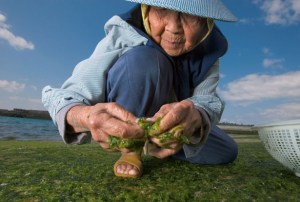
The first thing you notice about Ushi Okushima is her laugh. It begins in her belly, rumbles up to her shoulders, and then erupts with a hee-haw that fills the room with pure joy. I first met Ushi five years ago at her home in Okinawa, and now it’s that same laugh that draws me back to her small wooden house in the seaside village of Ogimi. This rainy afternoon she sits snugly wrapped in a blue kimono. A heroic shock of hair is combed back from her bronzed forehead revealing alert, green eyes. Her smooth hands lie serenely folded in her lap. At her feet sit her friends, Setsuko and Matsu Taira, cross-legged on a tatami mat, sipping tea. Since I last visited Ushi, she’s taken a new job, tried to run away from home, and started wearing perfume. Predictable behavior for a young woman, perhaps, but Ushi is 103. When I ask about the perfume, she jokes that she has a new boyfriend, then claps a hand over her mouth before unleashing one of her blessed laughs.
woman-seaweed-615

With an average life expectancy of 78 years for men and 86 years for women, Okinawans are among the world’s longest lived people. More important, elders living in this lush subtropical archipelago tend to enjoy years free from disabilities. Okinawans have a fifth the heart disease, a fourth the breast and prostate cancer, and a third less dementia than Americans, says Craig Willcox of the Okinawa Centenarian Study.

What’s the key to their success? “Ikigai certainly helps,” Willcox offers. The word translates roughly to “that which makes one’s life worth living.” Older Okinawans, he says, possess a strong sense of purpose that may act as a buffer against stress and diseases such as hypertension. Many also belong to a Okinawan-style moai, a mutual support network that provides financial, emotional, and social help throughout life.

A lean diet may also be a factor. “A heaping plate of Okinawan vegetables, tofu, miso soup, and a little fish or meat will have fewer calories than a small hamburger,” says Makoto Suzuki of the Okinawa Centenarian Study. “And it will have many more healthy nutrients.” What’s more, many Okinawans who grew up before World War II never developed the tendency to overindulge. They still live by the Confucian-inspired adage “hara hachi bu—eat until your stomach is 80 percent full.”

And they grow much of their own food. Taking one look at the gardens kept by Okinawan centenarians, Greg Plotnikoff, a traditional-medicine researcher at the University of Minnesota, called them “cabinets of preventive medicine.” Herbs, spices, fruits, and vegetables, such as Chinese radishes, garlic, scallions, cabbage, turmeric, and tomatoes, he said, “contain compounds that may block cancers before they start.”

Ironically, for many older Okinawans this diet was born of hardship. Ushi Okushima grew up barefoot and poor. Her family scratched a living out of Ogimi’s rocky terrain, growing sweet potatoes, which formed the core of every meal. To celebrate the New Year, her village butchered a pig, and everyone got a morsel of pork.

During World War II, when U.S. warships shelled Okinawa, Ushi and Setsuko, whose husbands had been conscripted into the Japanese Army, fled to the mountains with their children. “We experienced terrible hunger,” Setsuko recalls.

Ushi now wakes every morning at six and eats a small breakfast of milk, bananas, and tomatoes. Until very recently she grew most of her food (she gave up gardening when she took a job). But her tradition-honored daily rituals haven’t changed: morning prayers to her ancestors, tea with friends, lunch with family, an afternoon nap, a sunset social hour with friends, and before bed a cup of sake infused with the herb mugwort. “It helps me sleep,” she says.

Back in Ushi’s house we’re finishing our tea. Outside, dusk is falling; rain patters on the roof. Ushi’s daughter, Kikue, who is 78 and finds little amusement in the attention her mother draws, shoots me a glare that I take to mean “you’ve overstayed your welcome.” (When Ushi ran away from home, she was actually fleeing an argument with Kikue. She packed a bag and boarded a bus without telling her daughter. A relative caught up with her in a town 40 miles (64.4 kilometers) away.)

Ushi, Setsuko, and Matsu take the cue and fall silent in unison. These women have shared each other’s fortunes and endured each other’s sorrows for nearly a century and now seem to communicate wordlessly.

What is Ushi’s ikigai, I ask—that powerful sense of purpose that older Okinawans are said to possess?

“It’s her longevity itself,” answers her daughter. “She brings pride to our family and this village, and now feels she must keep living even though she is often tired.”

I look to Ushi for her own answer.

“My ikigai is right here,” she says with a slow sweep of her hand that takes in Setsuko and Matsu. “If they die, I will wonder why I am still living.”

Adventists

It’s Friday morning, and Marge Jetton is barreling down the San Bernardino Freeway in her mauve Cadillac Seville. She peers out the windshield from behind dark sunshades, her head barely clearing the steering wheel. Marge, who turned 101 in September, is late for one of several volunteer commitments she has today, and she’s driving fast. Already this morning she’s walked a mile (1.6 kilometers), lifted weights, and eaten her oatmeal. “I don’t know why God gave me the privilege of living so long,” she says, pointing to herself. “But look what he did.”

God may or may not have had something to do with Marge’s vitality, but her religion has. Marge is a Seventh-day Adventist. We’re in Loma Linda, California, halfway between Palm Springs and Los Angeles. Here, surrounded by orange groves and usually blanketed in mustard-colored smog, lives a much-studied concentration of Seventh-day Adventists.

The Adventist Church—born during the era of 19th-century health reforms that popularized organized vegetarianism, the graham cracker, and breakfast cereals (John Harvey Kellogg was an Adventist when he started making wheat flakes)—has always preached and practiced a message of health. It expressly forbids smoking, alcohol consumption, and eating biblically unclean foods, such as pork. It also discourages the consumption of other meat, rich foods, caffeinated drinks, and “stimulating” condiments and spices. “Grains, fruits, nuts, and vegetables constitute the diet chosen for us by our Creator,” wrote Ellen White, an early figure who helped shape the Adventist Church. Adventists also observe the Sabbath on Saturday, socializing with other church members and enjoying a sanctuary in time that helps relieve stress. Today most Adventists follow the prescribed lifestyle—a testimony, perhaps, to the power of mixing health and religion.

From 1976 to 1988 the National Institutes of Health funded a study of 34,000 California Adventists to see whether their health-oriented lifestyle affected their life expectancy and risk of heart disease and cancer. The study found that the Adventists’ habit of consuming beans, soy milk, tomatoes, and other fruits lowered their risk of developing certain cancers. It also suggested that eating whole wheat bread, drinking five glasses of water a day, and, most surprisingly, consuming four servings of nuts a week reduced their risk of heart disease. And it found that not eating red meat had been helpful to avoid both cancer and heart disease.

In the end the study reached a stunning conclusion, says Gary Fraser of Loma Linda University: The average Adventist lived four to ten years longer than the average Californian. That makes the Adventists one of the nation’s most convincing cultures of longevity.

I meet Marge at the Plaza Place hair salon in Redlands, where she’s kept an 8 a.m. appointment with stylist Barbara Miller every Friday for the past 20 years. When I arrive, Marge is flipping through a copy of Reader’s Digest as Barbara uncurls a silver lock of hair. “You’re late!” she shouts. Behind Marge a line of stylists languidly coif other heads of hair, all in varying shades of gray. “We’re a bunch of dinosaurs around here,” Barbara whispers to me. “You may be,” Marge shoots back. “Not me.”

Half an hour later, her hair a cottony tuft, Marge leads me to her car. She doesn’t walk, quite, but scoots with a snappy, can-do shuffle. “Get in,” she orders. “You can help.” We drive to the Loma Linda adult services center, a day-care center for seniors, most of whom are several decades younger than Marge. She pops open her trunk and heaves out four bundles of magazines she’s collected during the week. “The old folks here like to read them and cut out the pictures for crafts,” Marge explains. Old folks?

Next stop: delivering recyclable bottles to a woman on welfare who will later redeem them for deposits. On the way Marge tells me she was born poor, to a mule skinner father and homemaker mother in Yuba City, California. She remembers the 1906 San Francisco earthquake, when she was just a toddler, and the aftershock that reached her family farm and sloshed water out of the animal trough. She worked as a nurse, put her husband through medical school, and raised two children as a doctor’s wife. Her husband, James, died two days before their 77th anniversary. “Of course I feel lonely once in a while, but for me that’s always been a sign to get up and go help somebody.”

Like many Adventists, Marge spends most of her time with other Adventists. “It’s difficult to have non-Adventist friends,” she says. “Where do you meet them? You don’t do the same things. I don’t go to movies or dances.” As a result, researchers say, Adventists increase their chances for long life by associating with people who reinforce their healthy behaviors.

At noon, back at Linda Valley Villa, where Marge lives in a community of retired Adventists, she treats me to lunch. We sit by ourselves, but a stream of neighbors stop by to say hello. Over tofu casserole and mixed green salad, I ask Marge to share her longevity wisdom.

“I haven’t eaten meat in 50 years, and I never eat between meals,” she says, tapping her perfect teeth. “They’re all mine.” Her volunteer work helps her avoid the life-shortening loneliness suffered by so many seniors—and gives her a sense of purpose, which imbues the lives of other successful centenarians. “I realized a long time ago that I needed to go out to the world,” she says. “The world was not going to come to me.”

I have a last question for Marge. After interviewing more than 50 centenarians on three continents, I’ve found every one likable; there hasn’t been a grump in the bunch. What’s the secret to a century of congeniality?

“Well, I like to talk to people,” she says. “I look at strangers as friends I haven’t met yet.” She pauses to rethink her answer. “Then again, people may look at me and wonder, Why doesn’t that woman keep her mouth shut!”

Article by By Dan Buettner, National Geographic Magazine, November 2005

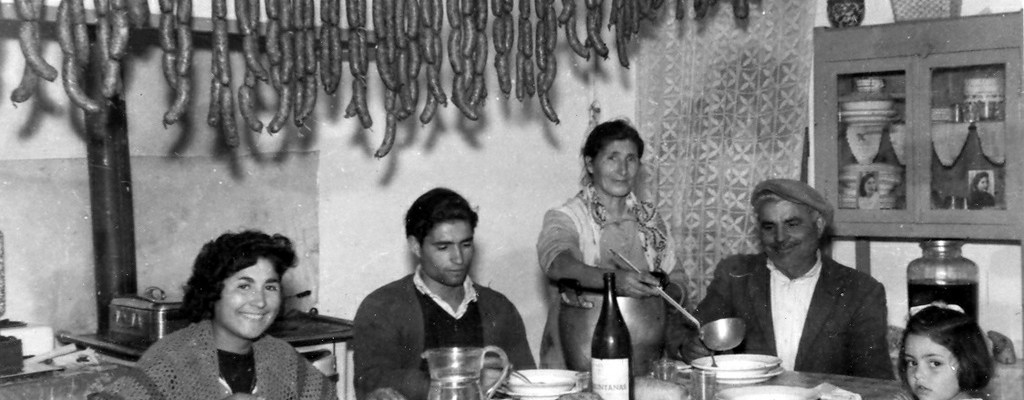
-Main Photo on the top: Titolo: Famiglia dell’azienda di Corea durante il pranzo, Autore: Poddighe Elio, A cura di: Giraldi Francesca, Trudu Antonio, Sardinia Digital Library
-other photos from National Geographic Magazine November 2005


6 Desires: DH Lawrence and Sardinia – Mark Cousins is lost somewhere over The Rainbow

Mark Cousins’s experimental travelogue in the footsteps of DH Lawrence will inspire viewers to return to the books – anything other than the screen.

My overriding desire in watching this pseudo-documentary following in the footsteps of DH Lawrence’s 1921 trip to Sardinia was that it would end. To be fair, it does, fairly soon. Yet never has 85-minutes crept by at such a snail’s pace.

Director Mark Cousins, coming off the back of two very highly rated films, here goes in for in long, static shots of the landscape and its inhabitants, soundtracked by his narrative of a letter to the novelist. He addresses him as “Bert” at the end of so many sentences it begins to become a verbal tic; each time the name sounds like a wet mouth biting into a poisoned apple. Jarvis Cocker provides the voice of Lawrence himself in long quotes the book inspired by the trip, Sea and Sardinia.

Some of the footage is quite beautiful; other shots seem more amateurish, as if either the light or the equipment wasn’t up to scratch. With such insistent focus on natural beauty, that’s important. Coupled with Cousins’s voiceover philosophising the effect is of someone showing their vacation slide show during a community college literature class.

Cousins wants to be another character in this narrative – he holds laminated photos of Lawrence and others with his fingers still conspicuously visible in the frame. He spends the second half of the film dismantling Lawrence’s views on masculinity, politics, and superiority.

At one point, the film starts to pick up steam, investigating the celebration of St Anthony in a small village where the residents light bonfires and dress up as devils with their backs covered in sheep bells. But, just as your interest is piqued, Cousins explains that “often the liveliest part of a film shoot is what happens behind the scenes”. Cue an introduction to the producers, sound tech, and their driver.

Article by Brian Moylan , The Guardian ,Saturday 24 January 2015