Chia NEW

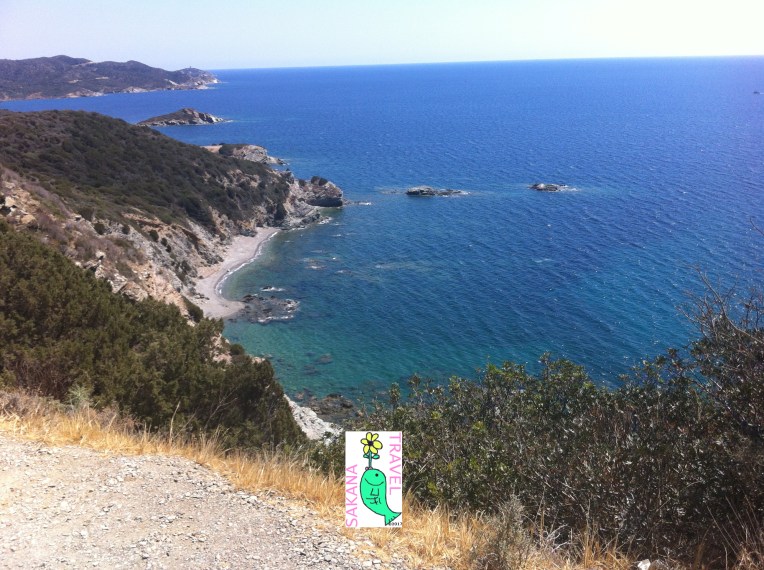
Chia is located along the breath-taking road of the south-west coast of Sardinia, the houses appear to grow out of the sea making it a perfect place to pass the afternoon staring out at the bay while sipping a nice glass of wine.


Sa Colonia V
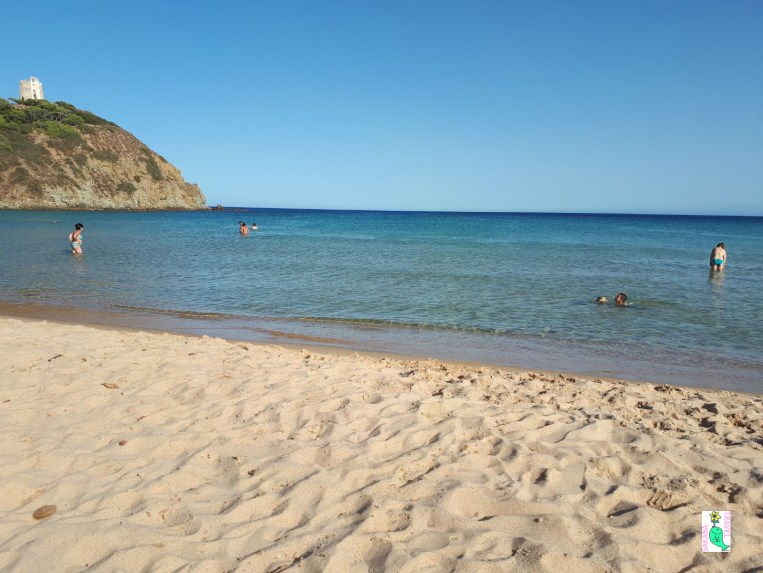
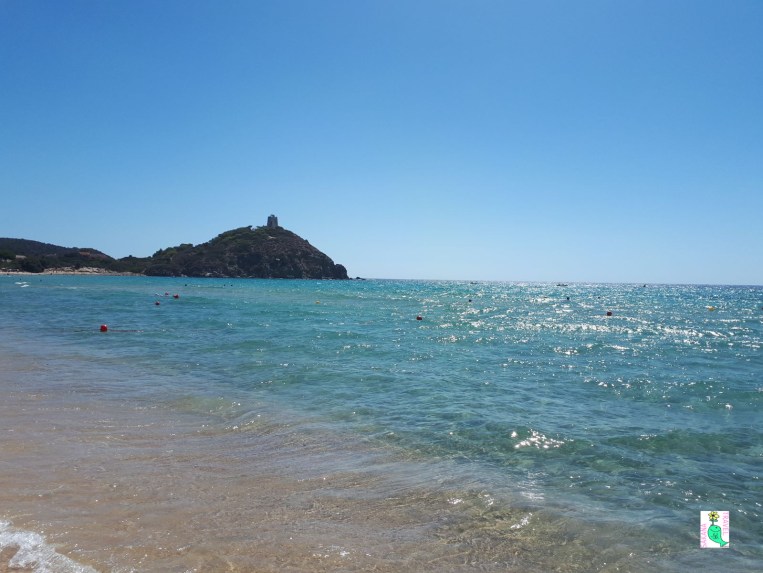
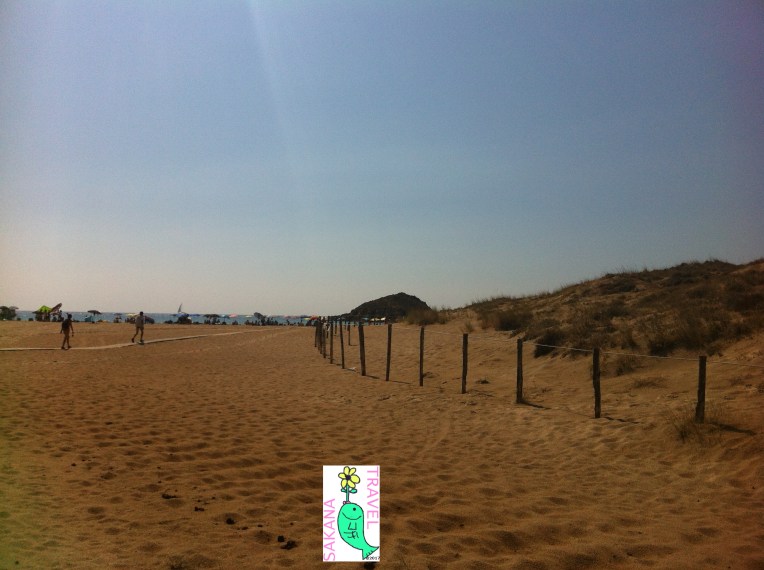
Sa Colonia Beach view of the Torre di Chia photo by Stefano C. Sakanatravel 2017


At a walking distance from the village, with rolling dunes, white sand and framed on the right side by the Spanish watchtower, “Torre di Chia” is one of the best beaches on the southern coast, a perfect sandy arc with a pretty lagoon behind.


Verso la Torre di Chia
Path towards Torre di Chia photo by Stefano C. Sakanatravel 2017


Around the tower, built by the Spanish crown against the incursion of the pirates interested on the river water, have been found the remains of the ancient village of Chia, the fourth-century BC Phoenician and Carthaginian town of Bythia, ( in the locality of Isula Manna) and then Roman centre, mentioned in Ptolemy’s Geography, but never attaining the same importance as Nora or Tharros.

Chia town landscape V
Chia town photo by Sakanatravel 2017

Among the ruins brought to light following a storm in the 30s including some tombs and parts of a temple probably dedicated to the Egyptian deity Bes, there are the remains of a Punic Tophet and the ancient road that leads to the important city of Nora.
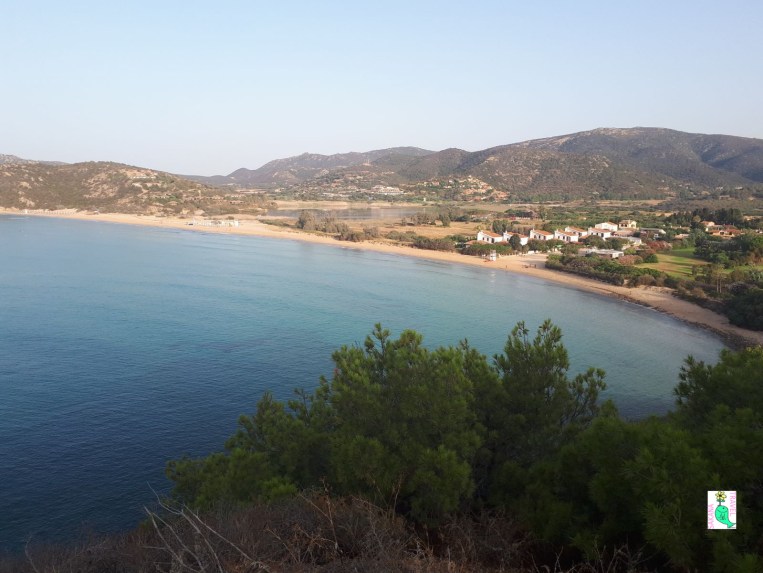
Sa Colonia dalla Torre di Chia
View from Torre di Chia photo by Daigo F. Sakanatravel 2017


A walk up to the tower affords a grand view south overlooking the coastline also known as Baia di Chia dotted with pretty coves and an array of beautiful beaches framed by dense vegetation and brightened by an emerald -green sea.
It is a spectacular place to pass a few hours.

Beaches

Chia can be proud of a variety of beaches to suit every taste, from long stretches of glaring white sand with their shallow waters to pretty rocky coves, overall is an impressive sight.

On the west of Torre di Chia:

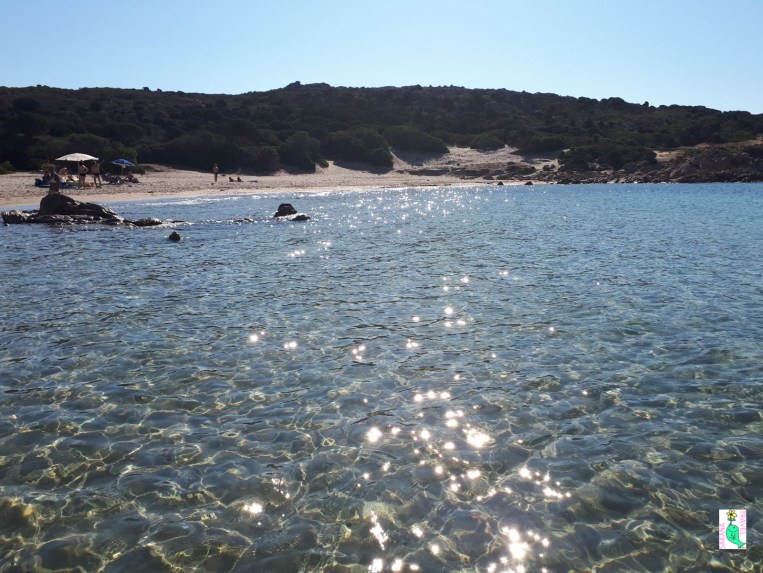
Sa Colonia

This wonderful white-collared stretch of land lay south of Chia, taking the form of a boundless beach surrounded by Asphodelus and sprinklings of lavender and Cistus grow on the open slopes, while heather crowds underneath the pine.

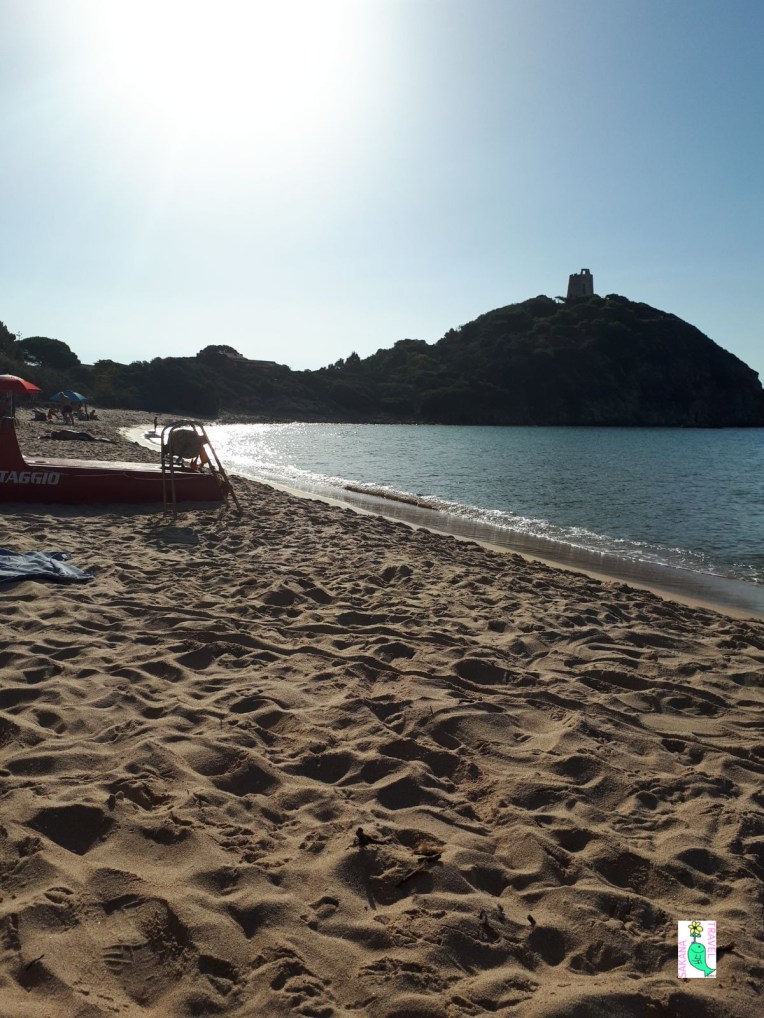
Sa Colonia IV

Sa Colonia IIISa Colonia II

Cala del Morto 

A tiny, rather special rocky cove sits amidst juniper low trees showing a pretty sandy bay will draw you down to the magnetic turquoise sea for a refreshing dip.
Located a walking distance westward from Sa Colonia beach through a hilly path; although it is quite crowded in the summer time this superb spot manages to keep its laid-back, unspoiled charms throughout the year.


Porto di Campana Beach

You head down into an aquamarine-colored bay, set at the foot of dark green and ivory white sandy dunes which reach even 20 meters high and like magic a large and sweeping beach appear to your sight.
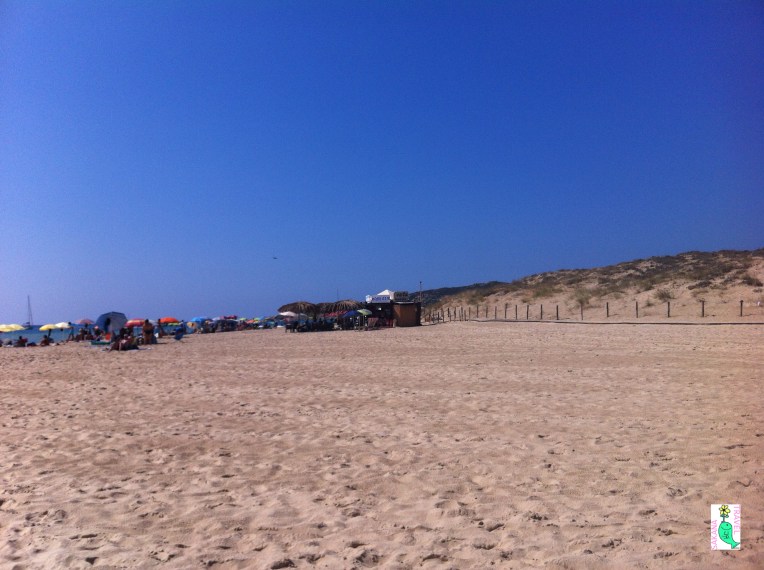
Chia Campana XI

A superb view greets you the white sand glares in the sunlight and the clear blue sea reflects sky-blues shallow waters making this beautiful bay ideal for a picnic day in an amazing setting.

Chia Campana IIII
Arriving from the parking place just before the beach you can admire the immense natural pond ideal habitat for an array of species of birds from coots to little egrets to grey herons and especially flamingos coming from Africa that paddle here and breed their small ones
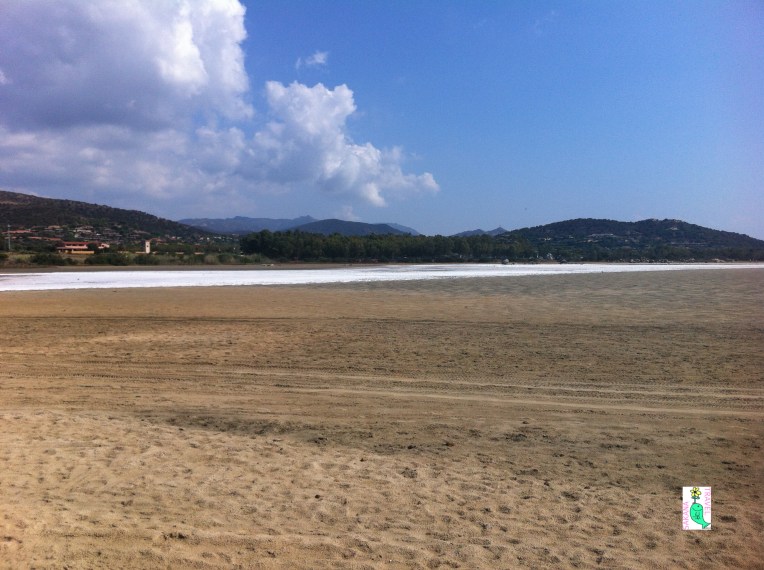
Chia Campana IX.JPG
Campana beach can be proud of many facilities for visitors: it is wheelchair accessible, a car park, restaurants, and beach bars to suit every taste.


Capo Spartivento
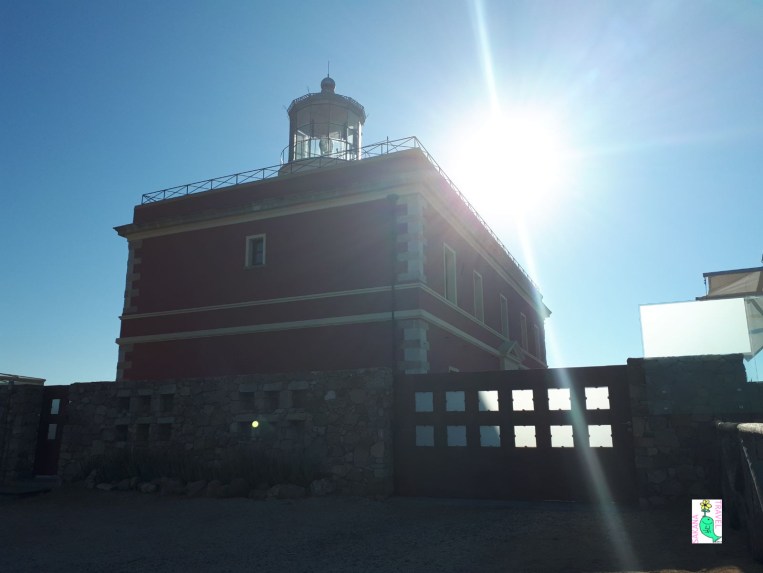
Capo Spartivento
From Cala Cipolla, the path towards the Faro (lighthouse) Capo Spartivento is brim-full of magnificent country scenery at one side and the magnificent view over the Chia Bay and of all the south coast on the other, achieving its best in spring when the meadows are saturated with wildflowers and the trees are freshly green.
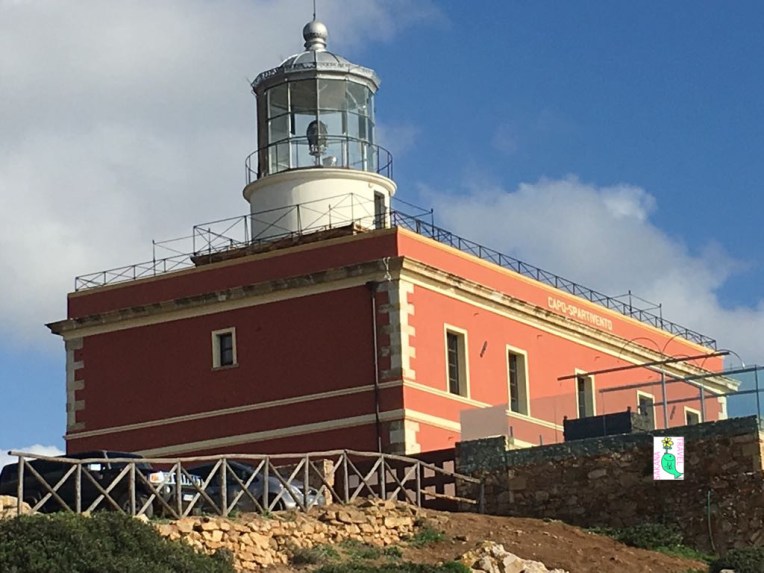
Spartivento Antonio F.
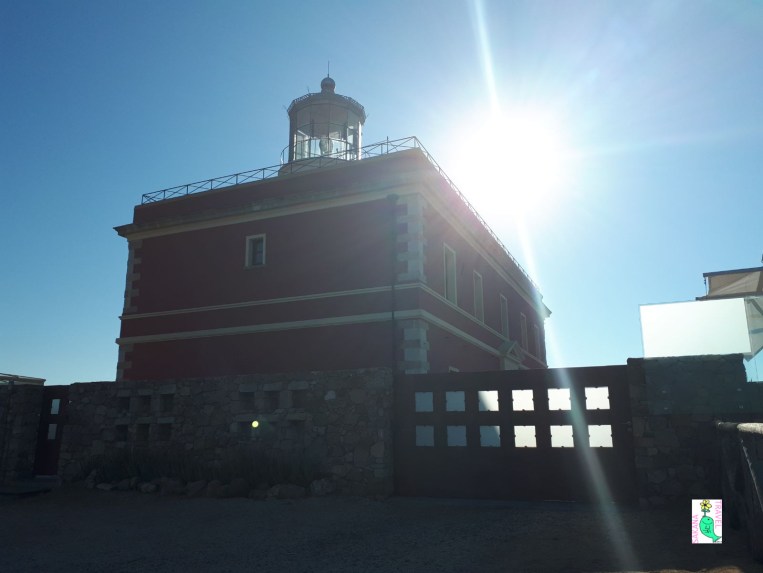
The Lighthouse “Faro” Capo Spartivento” dominates the surrounding standing at the highest tip of the promontory that bears the same name. Built in the middle 19th century by the Italian Navy this amazing structure used to accommodate the family of the lighthouse steward till recently. Nowadays the Faro is a luxury residence nonetheless keeping its brilliant design and charming appearance.

Su Giudeu

A long sandy beach, which is excellent for children, shortly, a stunning bay overlooking the clear turquoise waters where high sandy dunes covered with junipers, mirtus, and pines share the lower slopes.

Su Giudeu Beach 6 AF
It is an awesome sight that shines up at you also known as the S’ABBA DURCI beach (freshwater beach), by local knowledge especially on its eastern side (where some fresh water from the river Perdosu and the Stagno join the sea).
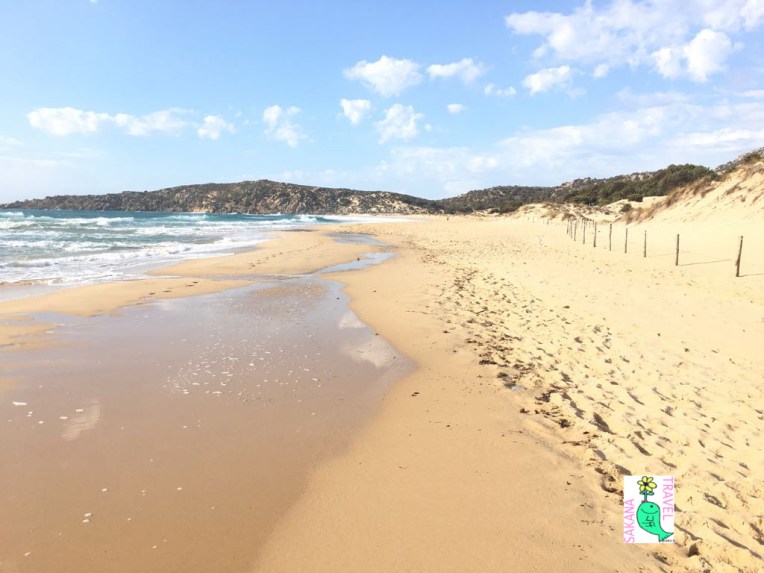
Su Giudeu beach 4 AF
In this wild and wonderful stretch of southern coast families of flamingos have made it their home for part of the year wandering around in the nearby lagoon. (Stagno di Stangioni de su Sali where the needed fresh water is brought in by the River Perdosu)
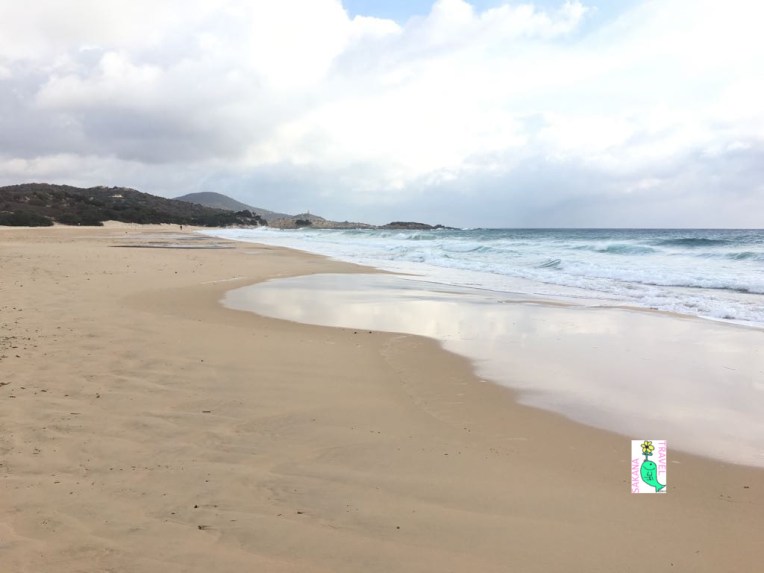
Su Giudeu beach 5 AF
The sea floors of su Giudeu are rich in fauna and natural beauty with quite a few reefs just above the surface a perfect and fun location for divers.
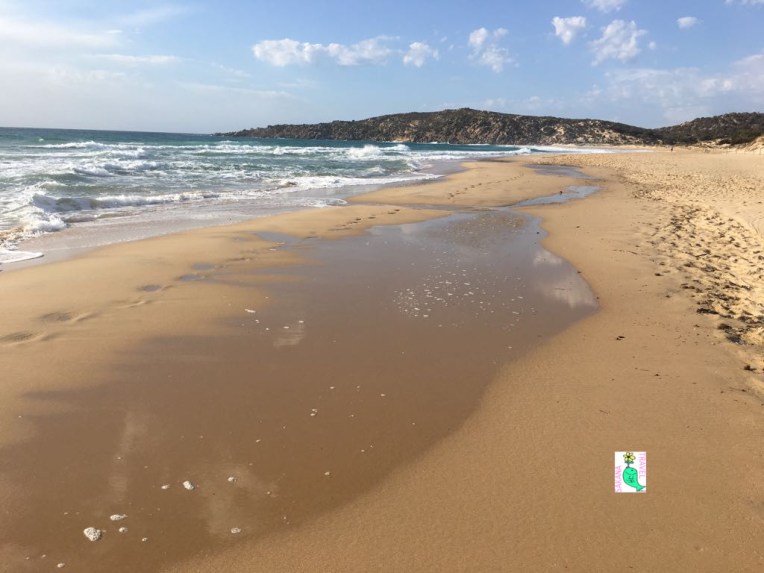
Su Giudeu beach 3 AF
Not far from the shore the small island just in front of su Giudeu beach is an impressive sight, between easy reach thanks to the shallow waters typical of the south a tiny, rather special rocky islet of Su Giudeu sits untouched with its ridges toppling off into the sea.


Cala Cipolla  

Cala Cipolla II
An irresistible untouched sandy beach guarded by a rocky promontory, only accessible on foot leaving from the parking hundred meters away. Here the rich color contrast of the white beach, blue sea, pine and juniper forest and rose –coloured rock shore-line make this secret spot a rare sight.
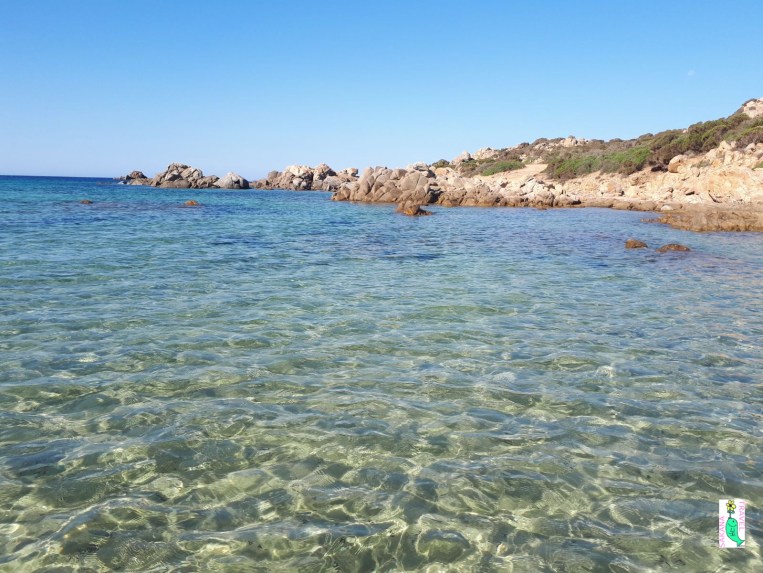
Cala Cipolla
On the right side of this sandy bay lay the suggestive lighthouse of Capo Spartivento reachable on foot through a country pebble pathway from which you will enjoy a tremendous view across the southern coastline.
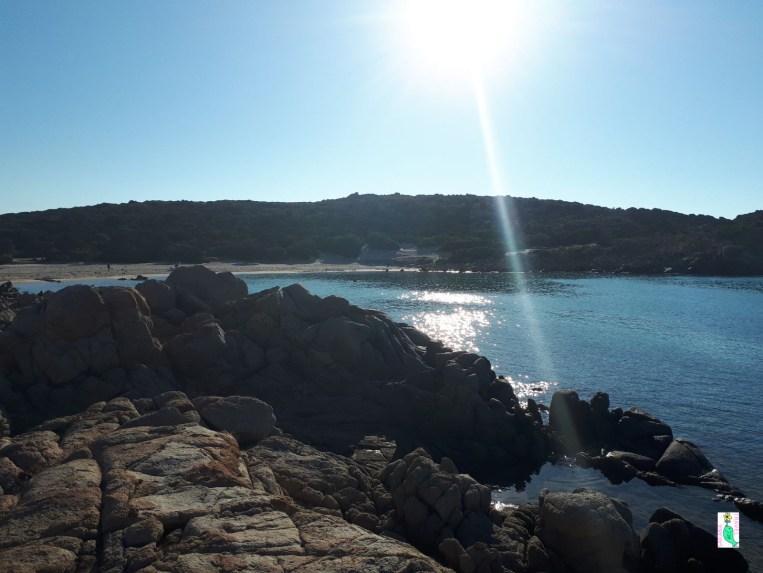
Cala Cipolla III
It is a perfect location for families thanks to its emerald blue and shallow waters that stay low as far as 10 mt from the shoreline and obviously for divers who like to explore its wonderful seabed.


On the east of Torre di Chia:

Su Portu (Porticciolo) and Isula Manna Su Cordolinu 
Su Portu Bay on the opposite promontory of Sa Colonia beach just in front of the Campeggio Torre Chia, wild and wonderful with turquoise shallow waters, offers a stunning view over the Chia Spanish Tower and the Su Cordolinu (wild mushroom) little inlet beautifully connected to the bay by an isthmus of sand and so can be visited on foot.

Su Portu
There is much to discover here: in particular the location of the Tophet (necropolis) of the Phoenician city of Bithia (8th century BC).


Cala de Sa Musica
Cala de Sa Musica ( The music bay) can only be reached via the sea or through a pebbly and difficult path which leave Porticciolo beach and wind down through the wild-pear low tree and juniper bushes, amidst seaside slopes, it appears in all its beauty a tiny rather special bay overlooking the coast towards Africa.


Natural Ponds

Stagno di Chia (Chia Pond)
Also known in Sardinian language as “Stagno di Sa Tanca e Sa Tuerra” lay undisturbed just behind the eastern side of La Colonia beach where it changes its name in Baia di Chia or Monte Cogoni beach.
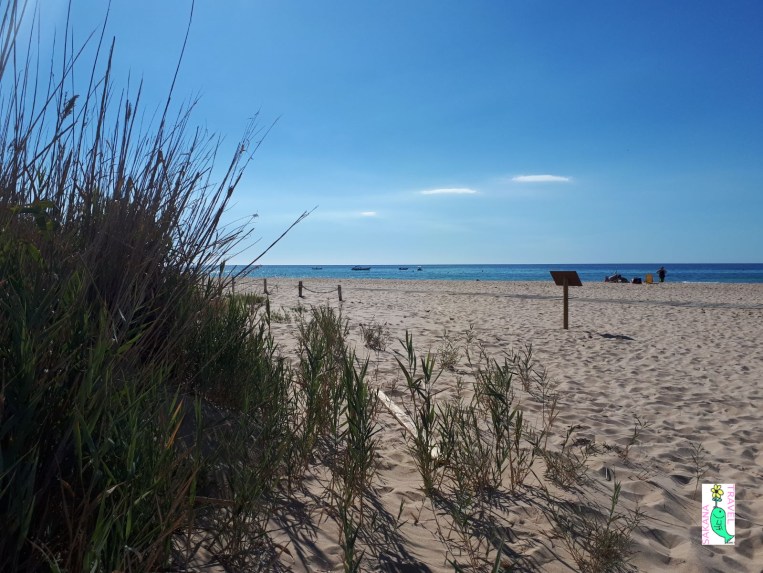
Dallo stagno verso monte Cogoni
View from the Chia Pond towards Cogoni beach

This attractive lagoon dries in full summer but all year round its fresh water are supplied by the wild natural river “Rio Baccu Mannu” that run from the Mount “Punta su Furru to the seashore next to the Cogoni Promontory at the location called Sa Foxi de Cogoni.
It is an explosion of natural beauties and rare birds that come here from Africa or from nearby regions to paddle in this beautiful water so in a normal spring or early summer afternoon you can admire the pink flamingos, herons, and even coots.


Stagno di Stangioni de su Sali 
This pretty lagoon consists of two ponds one very small and the main one and there are situated just behind the Su Giudeu beach, separated from it by precious natural white sand dunes. The fresh waters are brought in by the Rio Perdosu river
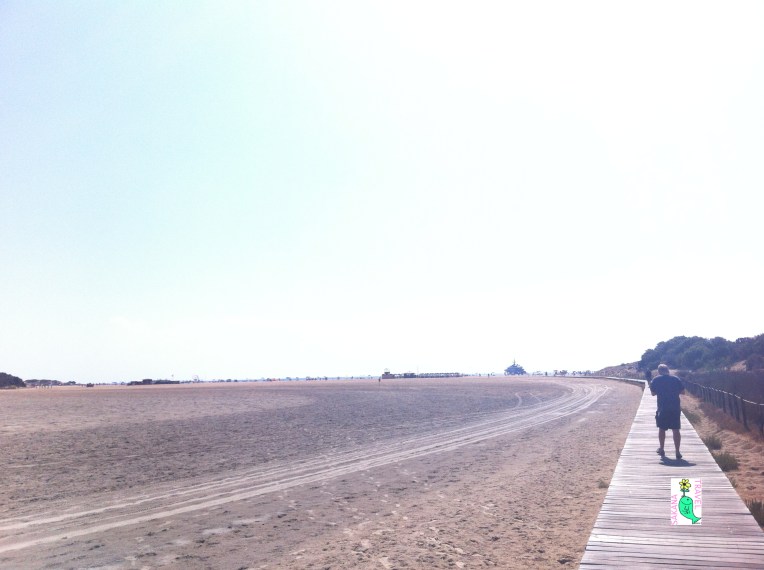
Su Giudeu Fab IV.JPG
This natural oasis is the usual habitat for many animal species and like the other Chia ponds home to rare bird species including a number of them which nest in the area: herons, coots, and pink flamingos.

CONTACT US
If you have any particular queries and questions about planning your stay in Sardinia,
please send  us an email :
sakanatravel@yahoo.com

Copyright © 2008-2017 SAKANA TRAVEL All rights reserved
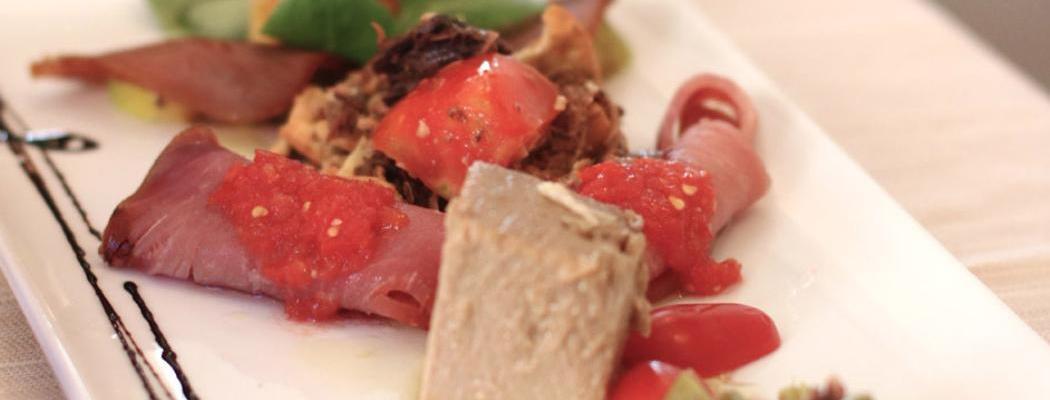


This Tiny Sardinian Island Town Is Doing Nose-to-Tail Tuna

Article by Alecia Wood first appeared in Munchies Magazine part of Vice Media LLC on 14th October 2016

Carloforte is famed for its bluefin tuna, where salted tuna hearts, slow-cooked tripe, dried bottarga, and oil-drenched offcuts are the backbone of its traditional island cuisine.


nose-to-tail-tuna_IMG_3717
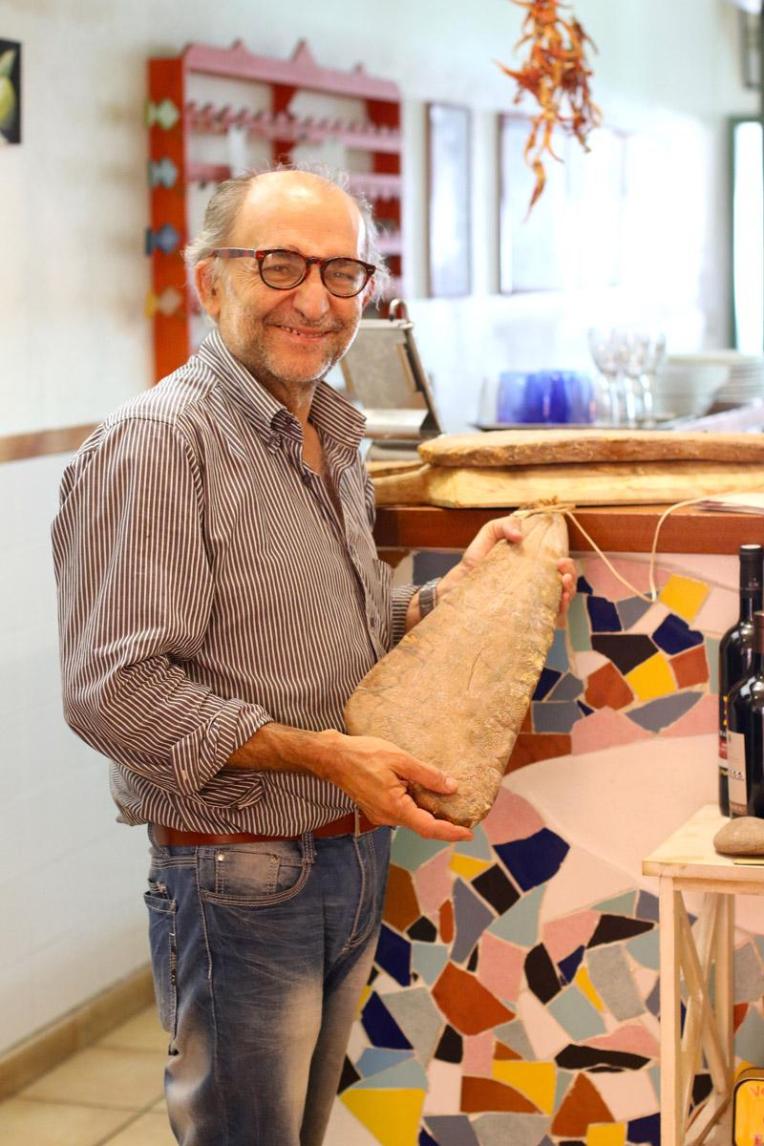
Owner of Al Tonno di Corsa restaurant, Secondo Borghero, cradling cured tuna roe known as bottarga. All photos by the author. Photo by Alecia Wood

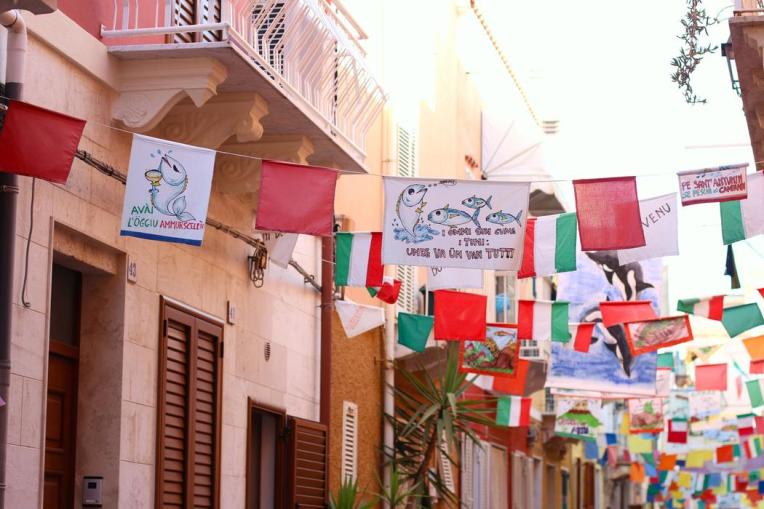
“This town was built on tuna,” fishmonger Daniele tells me, cradling a pair of vacuum-packed fish hearts. His shop sits on one of the hushed streets typical in Carloforte—just off Sardinia’s southwest coast on the tiny island of Isola di San Pietro—stocking the salted and tinned tuna products that hail from the fishing village.
Nobody lived on the island until 1736, when a community of Genoese coral fishers got kicked out of Tabarka in Tunisia, where they’d been sent to work. The then-king of Sardinia gave them refuge on Isola di San Pietro, and they brought their seafaring know-how and tabarkino dialect, still spoken by locals. Typical dishes there echo the settlers’ Italy-via-North Africa route, like cascà alla carlofortina, a couscous dish spiced with clove and cinnamon, topped with eggplant and chickpeas.

But the throngs of Italian tourists in Carloforte’s waterfront cafés are quick to suggest a different local delicacy: tonno rosso. The bluefin tuna is fished off the island every year from May to June using the tonnara, a complex system of anchored nets that channel the fish into an enclosure. “The tuna enter the sea from Gibraltar, arrive to Corsica, and come down here to Sardinia,” Daniele explains, tracing their path on a map of the Mediterranean that hangs on his wall. The historically brief fishing season—now coupled with strict quotas for fishing boats—means fresh tuna has only ever been available on the island for a month afterward. Locals made a habit of using up every part of the tuna, conserving all sorts of cuts and organs under salt or oil to last through the winter.

nose-to-tail-tuna_IMG_3804
Cuore di tonno: tuna hearts preserved in salt, on sale from a fishmonger in Carloforte. Photo by Alecia Wood

I head to Al Tonno di Corsa, a restaurant sheltered from the bustle of sightseers in a peaceful, pastel-hued laneway, welcoming punters with a stack of giant cured tuna roe—the bottarga—on the service counter. It opened in the 1980s, hoping to revive the traditional tuna preserves that were then becoming forgotten. “Originally, there were no fridges, so the philosophy of the cuisine of tuna here is very linked with the conservation of the meat. We wanted to make food that was typical to the island, that you find in people’s homes,” says owner Secondo Borghero. “When I was a boy, in every house there were spaces to make these things and pantries to keep the conserved fish ingredients

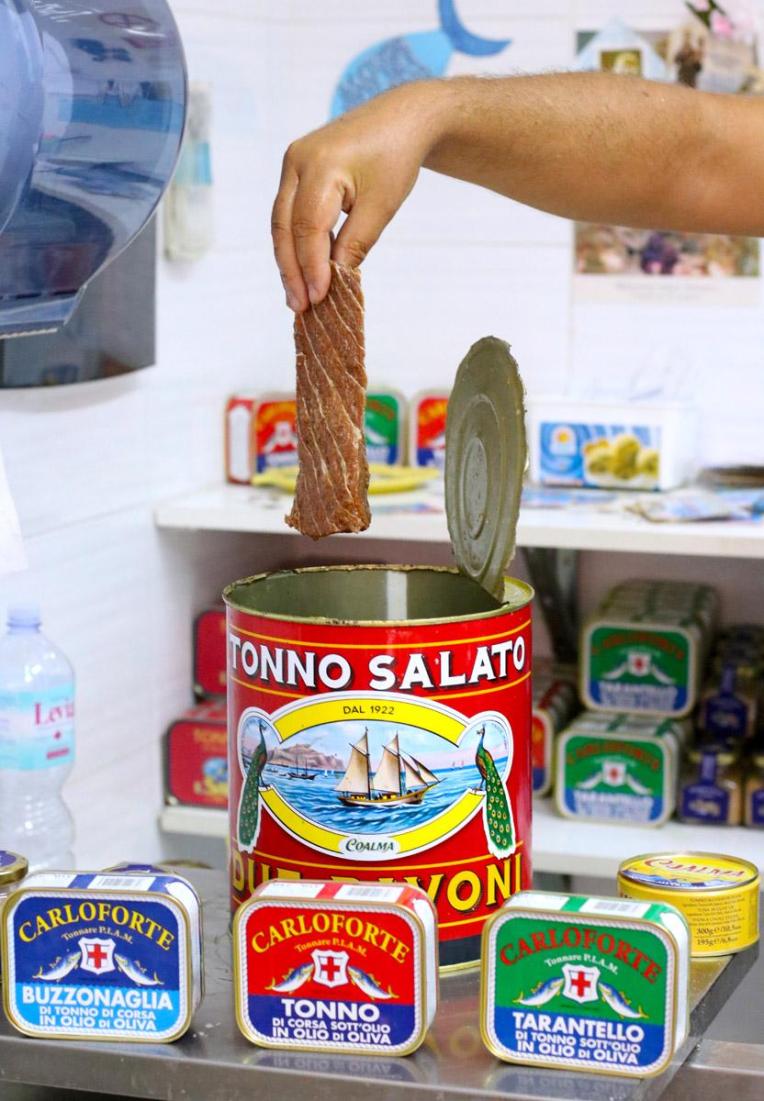
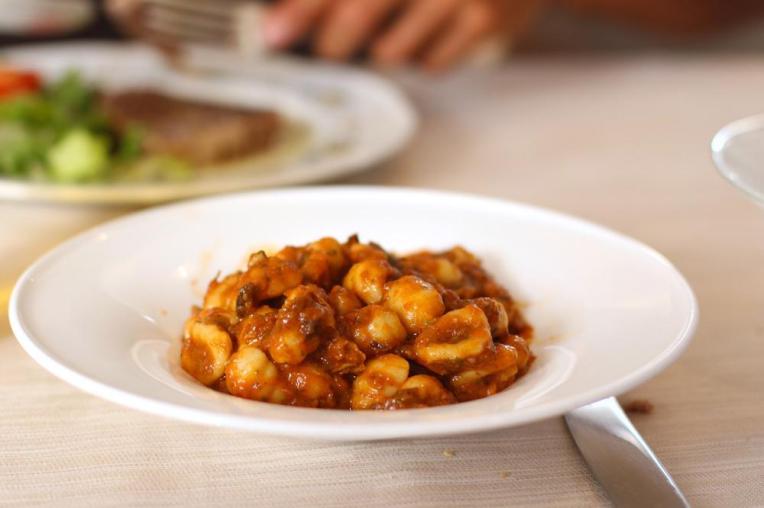
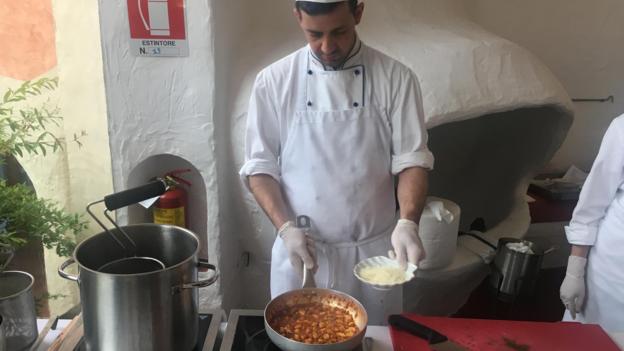
Lunch kicks off with a starter of their house-made tuna goods: sliced musciame, a prosciutto-like salted fillet; intensely salty shaved heart; and buzzonaglia, a jarred mix of flaky offcuts kept in olive oil. After that, I go for the belu—strips of tuna tripe cooked with tomato, white wine and potato—and cassulli, a pasta similar to gnocchi served with a rich, basil-spiked, tomato-tuna sauce. It’s a house specialty that Borghero invented, as well as a tuna pâté, to use even more of those otherwise undesired cuts.
It’s my first time trying bluefin tuna. As an Aussie, it’s always been synonymous with the demise of ocean ecosystems, and to be avoided. It strikes me as odd that everyone advising a traditional tuna meal in Carloforte hasn’t mentioned the massive issue of sustainability. I ask Borghero what he thinks about the plight of tuna.

nose-to-tail-tuna_IMG_3769
“This town was built on tuna,” says fishmonger Daniele.Photo by Alecia Wood

“It needs to become part of the logic of consumption that tuna has a seasonality. Just like in winter, you shouldn’t be eating peaches. It’s the same with fish.” The raw, prime tuna cuts are on offer during summer—after that, he’ll only serve the preserved items. “We wait for a year to have fresh tuna again. You have to follow the biological cycle. Raw tuna has become fashionable, but fish for us was always cooked or salted. A lot of people ask me for tartare, and I tell them we don’t have it. At first they say, ‘Well, it’s impossible that a tuna restaurant doesn’t have tartare,’ but many are happy because they discover something new.”
He says nothing about just not eating it, though.

nose-to-tail-tuna_IMG_3824
Tonno salato, or salted tuna. Photo by Alecia Wood

Back in the day, embracing the tuna offal and all wasn’t just about being thrifty, but understanding how a cooking style can enhance different cuts. “The tuna is a very big fish, so it’s just like an animal from the land—with a veal, the shank isn’t the same as the fillet. You make the best use of the prime material if you have a recipe that starts with the base, then you know the ingredient more deeply,” says Borghero. He explains the three types of tuna meat: the pink, delicate areas; the brick-red ones; and dark brown parts, where all the capillaries reach. “Those are good for the pâté and the sugo for the pasta. It has a strong flavour and gives the dish structure.”

nose-to-tail-tuna_IMG_3653
A dish of cassulli pasta with a ragù of tuna offcuts at Al Tonno di Corsa restaurant.Photo by Alecia Wood

After leaving picturesque, tranquil Carloforte, I learn the tuna harvest can be a bloody, brutal spectacle. It’s not really clear if that’s in keeping with ancient fishing methods, or if it’s a display for the sake of tourist attention. There’s a murky tension between maintaining culturally significant food traditions and addressing sustainability goals.
The carlofortino custom of embracing secondary—but no less delicious—tuna cuts is certainly no fix for the trouble we’ve put tuna in, but it’s surely a more respectful approach to eating all types of fish. We’ve welcomed crispy pig’s ears, bone broth, and slow-cooked oxtail—why not take a nose-to-tail attitude to the fruits of the sea, too?

Article by Alecia Wood first appeared in Munchies Magazine part of Vice Media LLC on 14th October 2016.

https://munchies.vice.com/en_us/article/jpkgey/this-tiny-sardinian-island-town-is-doing-nose-to-tail-tuna


Inland Sardinia

Inland Sardinia 

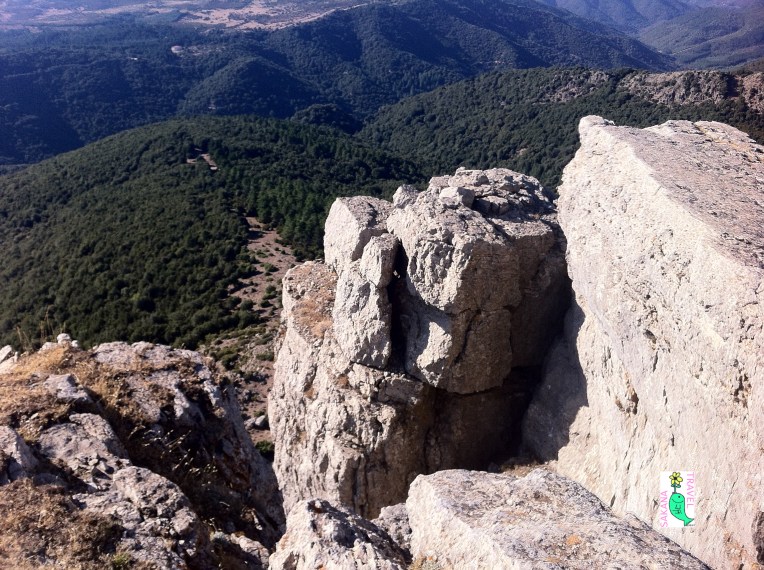
Monte Novo San Giovanni Orgosolo IV
Orgosolo Mount Novo San Giovanni -Inland Sardinia photo by Daigo Sakanatravel 2017


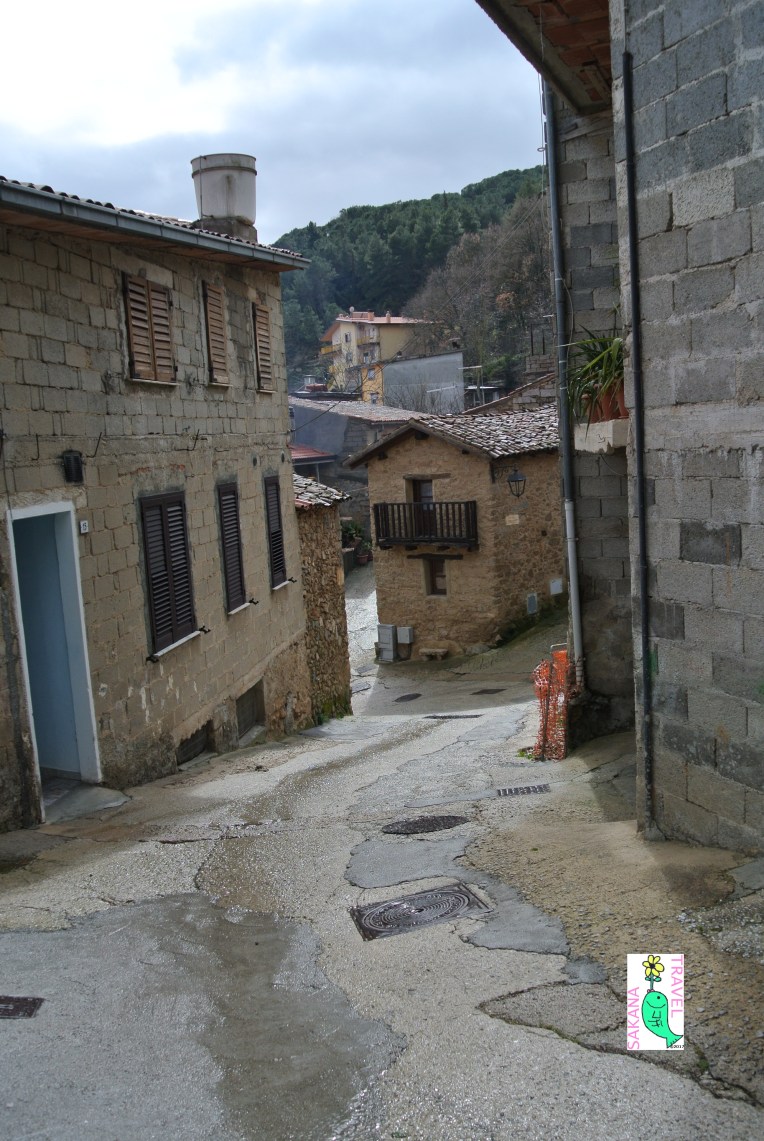
Gavoi I
Gavoi typical houses photo by F.F. Sakanatravel 2017


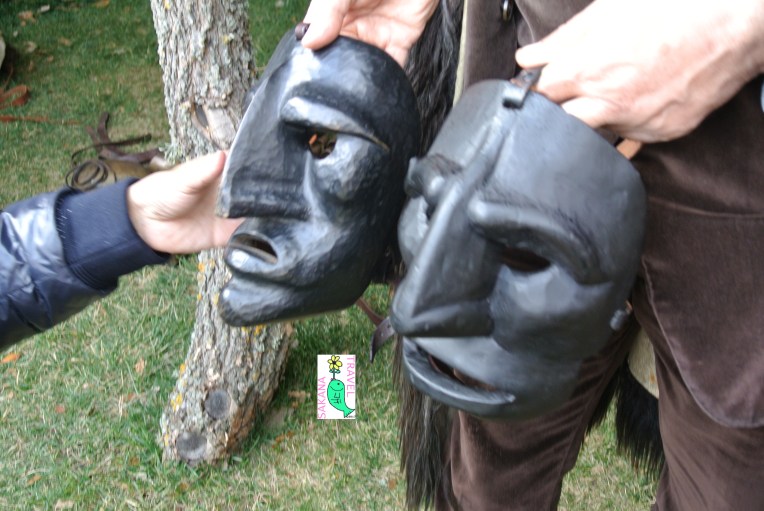
Mamuthones mask Sa Bisera I
Mamoiada Carnival ” Sa Bisera” Mamuthones Mask photo by F.F. Sakanatravel 2017


Monte Novo San Giovanni Orgosolo I
Orgosolo Mount Novo San Giovanni -Inland Sardinia photo by Daigo Sakanatravel 2017


Gavoi Gusana Lake
Gavoi Gusana Lake photo by F.F. Sakanatravel 2017


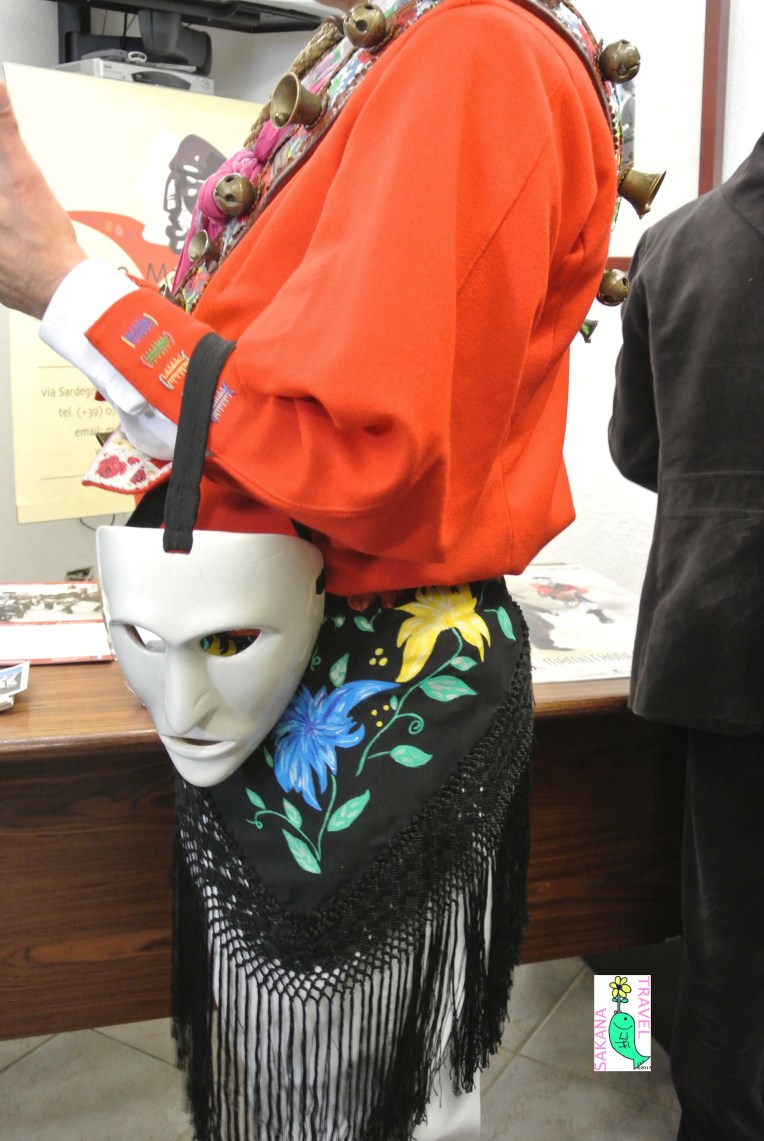
Issohadores I
Mamoiada Carnival Issohadores detail of Mask photo by F.F. Sakanatravel 2017


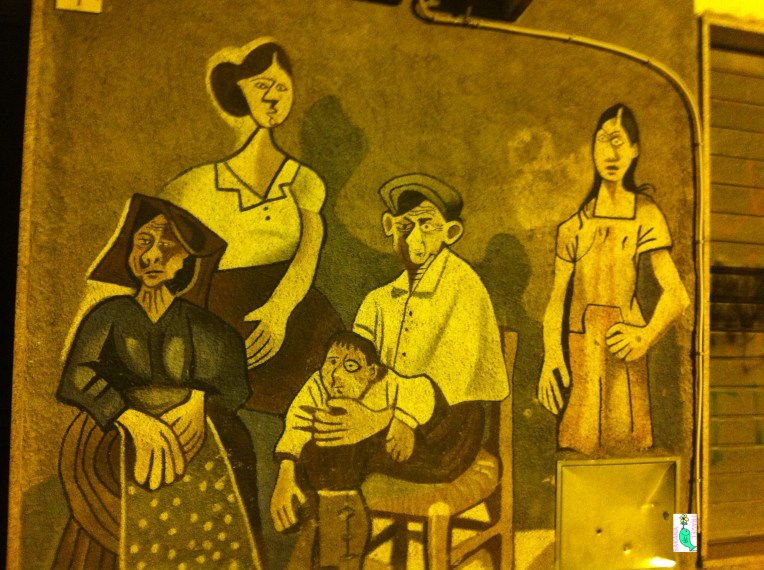
Orgosolo Murales II
Orgosolo Town Murales photo by Daigo Sakanatravel 2017


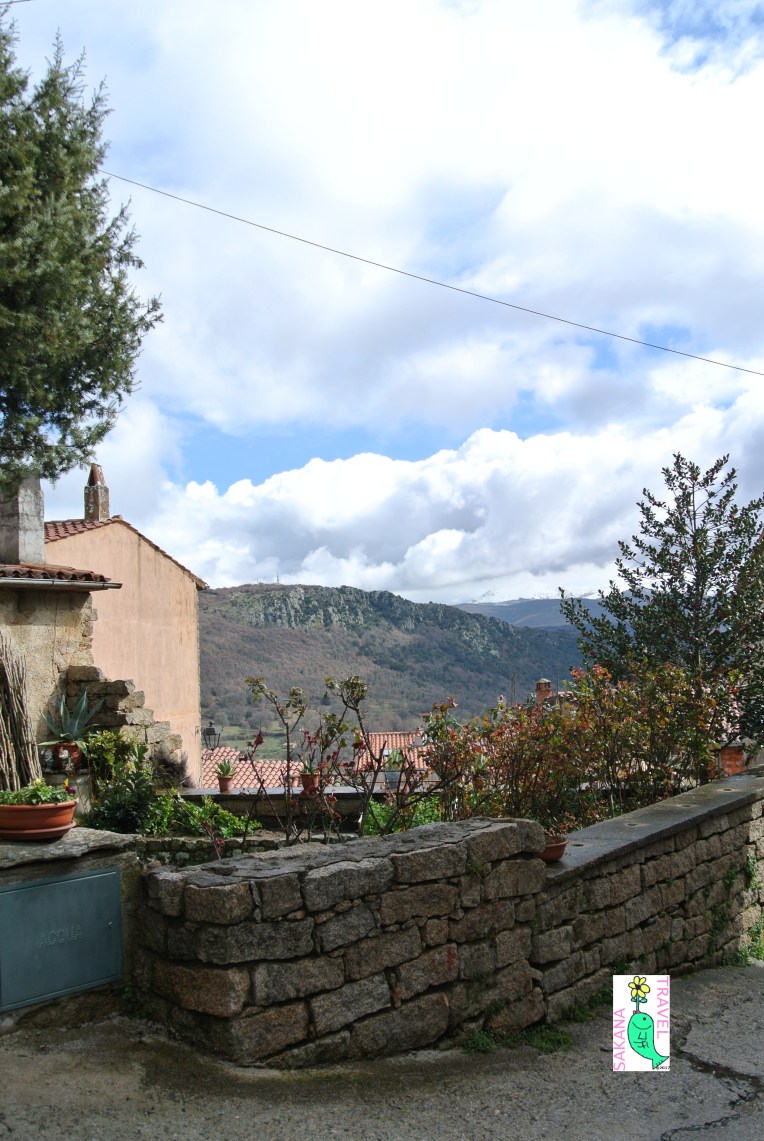
Gavoi
Gavoi landascape photo by F.F. Sakanatravel 2017


Orgosolo Murales
Orgosolo Town Murales photo by Daigo Sakanatravel 2017


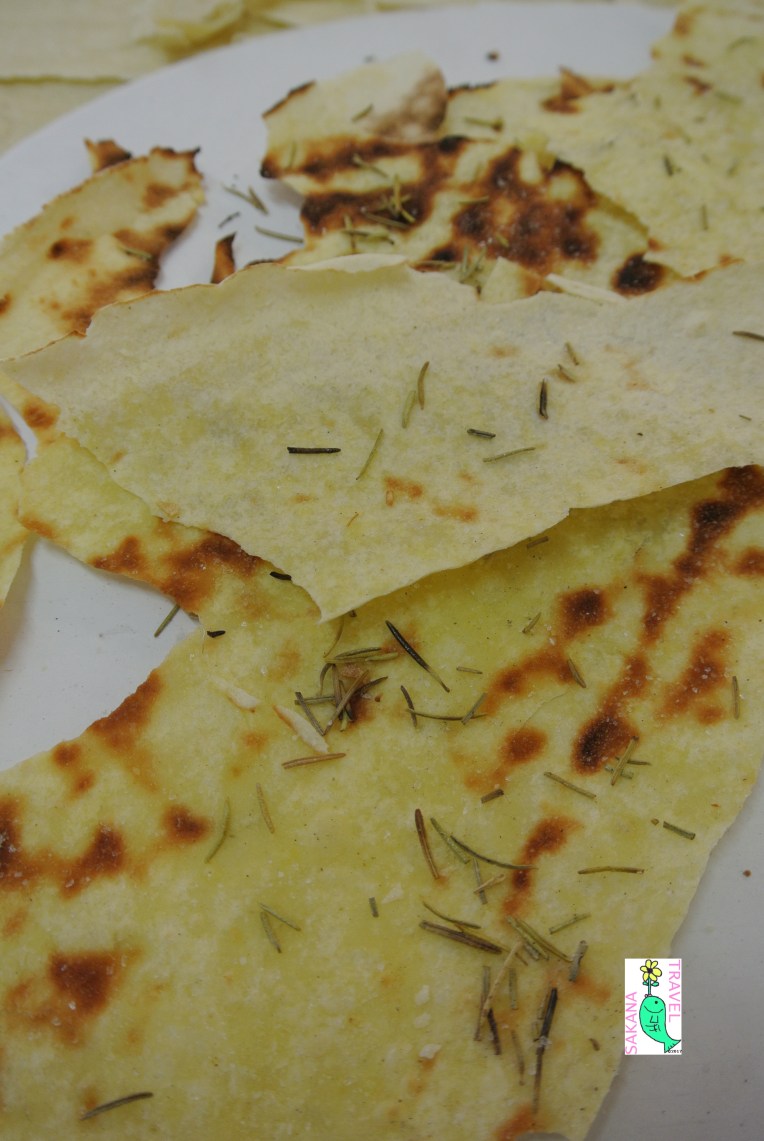
Pani Guttiau Gavoi
Gavoi Pani Guttiau Traditional Sardinian inland bread photo by F.F.Sakanatravel 2017


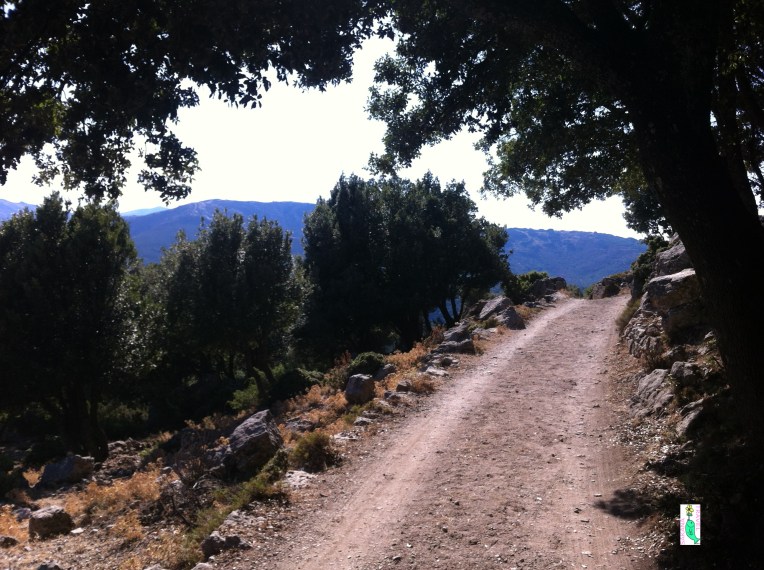
Path to Monte Novo San Giovanni Orgosolo
Orgosolo path to the mountain photo by Daigo Sakanatravel 2017

Copyright © 2008-2017 SAKANA TRAVEL All rights reserved
CONTACT US
If you have any particular queries and questions about planning your stay in Sardinia,
please send  us an email :
sakanatravel@yahoo.com


South Sardinia


Cala Cipolla II
Cala Cipolla Chia South Sardinia photo by  Stefano C. Sakanatravel


Sa Colonia IV
Sa Colonia beach Chia South Sardinia  photo by Stefano C. Sakanatravel


Sa Colonia V
Sa Colonia view of the Spanish Tower Chia South Sardinia photo by Stefano C. Sakanatravel


Sa Colonia
Sa Colonia Beach beautiful sea Chia South Sardinia photo by Stefano C. Sakantravel


Capo Spartivento
Capo Spartivento Il Faro The Lighthouse photo by Stefano C. Sakanatravel


Dallo stagno verso monte Cogoni
Chia from the Lagoon towards Mount Cogoni photo by Stefano C. Sakanatravel


Su Portu
Su Portu beach Chia South Sardinia photo by Stefano C. Sakanatravel 2017


Sa Tunda Teulada Typical Bread A.F.
Sa Tunda Teulada traditional bread South Sardinia photo by A.F. Sakanatravel


Su Giudeu beach 4 AF
Su Giudeu Beach Chia photo by A.F. Sakanatravel 2017


Su Giudeu beach 5 AF
Su Giudeu Beach Chia South Sardinia photo by A.F. Sakanatravel


The Perfect pasta dish Sardinians refuse to share

Article first appeared in BBC Travel Magazine 19th October 2017 by David Farley .

Malloreddus alla Campidanese can only be found on the Italian island, making it the quintessential pasta dish of Sardinia – and the one dish every visitor must try.

Malloreddus is not a malady. It just sounds like one. This I learned when I was perusing the menu of Arco Café, located on Manhattan’s Upper West Side. Soon enough, the affable Daniel Fiori, co-owner of the Sardinian restaurant, was sitting at my table explaining to me just what malloreddus is.
“It’s our national dish,” he said, if by ‘national’ he means Sardinia, and if that Italian island were an autonomous nation.


mallo1
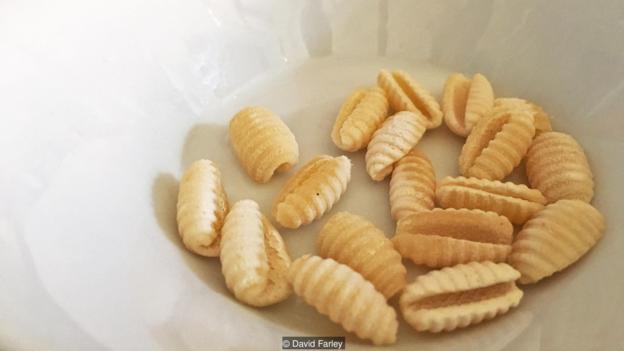
Malloreddus is a dumpling-like pasta ubiquitous in Sardinia (Credit: David Farley)


This dumpling-like pasta is ubiquitous in Sardinia, Fiori told me. “We make it with a breadbasket.” I cocked my head like a confused dog and Fiori went back in the kitchen, returning with a small wicker breadbasket and a fistful of dough. Rolling a small piece of dough to a string-like shape, he then flattened it out and curled the two sides together to create a dumpling. Then he rolled it down the back of the basket and showed it to me in the palm of his hand: the once-smooth dumpling now had grooves in it.

“The grooves capture the pasta sauce,” he said.

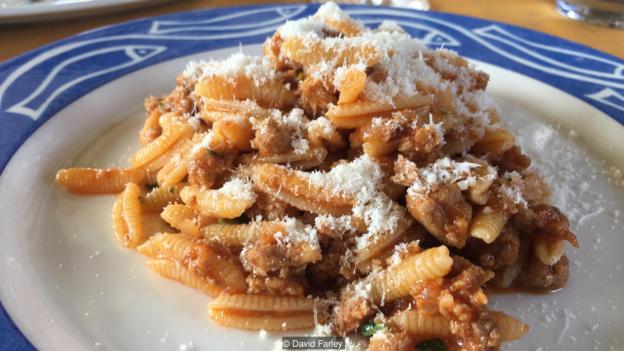
A few minutes later, I had a bowl of the malloreddus in front of me, slathered in a ragu of tomatoes, sausage and saffron. This is Sardinia’s most traditional dish: malloreddus alla Campidanese, a pasta dish named for Campidano, the fertile plain in the island’s south-west. “There are different types of pasta all over Italy, but this dish is unique. It’s 100% Sardinian.”

And he’s right: how many Italian dishes are laced with saffron? The spice, some food historians believe, was brought to Sardinia by the Phoenicians who arrived on the island from the Middle East a couple of millennia ago, revealing just how unique Sardinia and its cuisine is.
Mention Sardinia to any mainland-dwelling Italian, and they’ll swoon the second the name leaves your lips. To say that Sardinia has captured the imagination of Italians from the tip to the top of the boot would almost be an understatement. And just from a few bites of malloreddus alla Campidanese – the unctuous sausage, the chewy pasta, the tangy tomatoes and the hint of saffron poking through on my palate – it’s easy to see why. By the time I walked out of Arco Café, I decided I had to try the dish in its native land.
mallo2

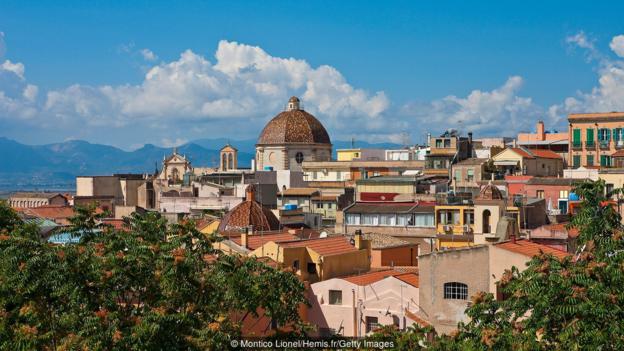
Sardinia has captured the imagination of mainland Italians (Credit: Montico Lionel/Hemis.fr/Getty Images)

After a little research, I discovered that all is not well in Sardinia in terms of its malloreddus production. Specifically, the state of Sardinia’s wheat. Italy has always relied on Sardinia for its high-quality durum wheat (from which malloreddus is made). In fact, the island – particularly Campideno – is utterly fertile, its wheat fields considered to be golden by generations of Sardinians and the empires that have swept through the island. The fields are so prized, in fact, that they’re one of the reasons the island has been occupied by foreign invaders through the centuries. The Carthaginians, for example, had a rule that ensured the wheat fields stayed in full sunlight by threatening to kill anyone who planted a single tree. A few centuries later, the Romans exploited the land and imported its goods throughout the empire: the island wasn’t called ‘Rome’s granary’ for nothing. From the 3rd to the 1st Century BC, the Campidano’s seven people per square kilometre produced half of all the grain that was used to feed the Roman army.

So, herein lies the problem: durum wheat production is dwindling. In the early 2000s, Sardinians cultivated 90,000 hectares of it. Now there’s less than 35,000. Farmers on the island still feel like they’re being exploited by Rome, as the government subsidies they receive are scant compared to farmers on the mainland. In November, a union of grain farmers in the Campidano and neighbouring region launched La Banca Etica dei Cereali, an organisation that demands no ‘foreign’ (read: mainland Italian) grain be used in the production of anything being labelled as Sardinian.
Is Sardinia’s most traditional dish under threat? I had to find out.

mallo3

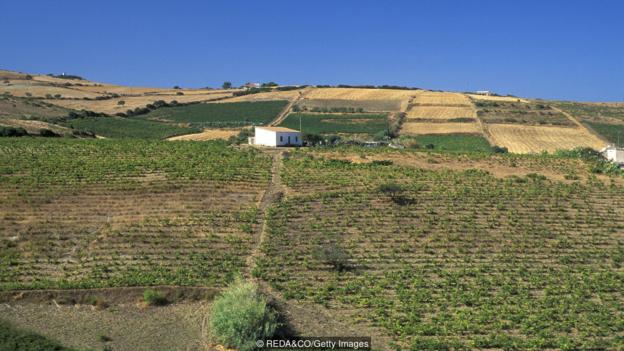
Mainland Italy has always relied on Sardinia for high-quality durum wheat (Credit: REDA&CO/Getty Images)

A few weeks later, I was standing in front of Michele Bacciu, executive chef at Cala di Volpe, inside a hotel of the same name, on Sardinia’s Costa Smerelda. He had agreed to show me how the dish is made. He rolled the balled-up pieces of dough down a ciurili, a rectangular board vertically beset with ridges and grooves (thus creating the shallow lines in the pasta), and explained the importance of malloreddus alla Campidanese to Sardinia. “It’s all Sardinia,” he said. “The tomatoes and wheat are grown here. The sausage is made here. And the saffron comes from here, too.”
He held out his hand, much like Fiori did back in New York, to show me the just-rolled malloreddus, looking not unlike a butterworm. Then he placed the small mound of malloreddus in a pot filled with bubbling, saffron-spiked tomato ragu’. “The problem,” Bacciu continued, “is that the wheat we produce – not to mention the pecorino cheese we make here, too – big corporations from the mainland want to come and pay our farmers a low price for it, and ours is the highest quality.” He stopped and looked off into the distance. “We should keep our great products for us, for Sardinia!”

mallo4

Daniel Fiori: There are different types of pasta all over Italy, but this dish is unique (Credit: David Farley)

Depending on who you ask, the name ‘malloreddus’ either comes from the local word malloru, which means ‘bull’ because the finished pasta looks like a small bovine, or from the Latin word mallolus, meaning ‘morsel’. It’s unclear when malloreddus all Campidanese first appeared, but in many ways it makes sense that the island’s most popular dish is a hearty pasta made of beef (or lamb) and not seafood: because constant fear of invasion, Sardinia’s population retreated inland, turning its back on the sea, leaving the coasts largely unspoiled. Instead, farmers and shepherds cultivated their wheat fields and herds of lambs and cows far inland, thus developing a cuisine that largely relied on meat and not fish. Hence, a meaty ragu and a unique pasta shape became the most traditional dish of Sardinia. There are other Sardinian dishes that incorporate this pasta shape: for example, in the northwest of the island, populated by descendants of Catalonia, malloreddus ends up in a paella-like dish. But the ragu-topped version is the most popular.
A few days later, I met up with my friend and fellow BBC contributor Eliot Stein. Having lived on Sardinia for two years and written a couple of guidebooks on the island (plus countless travel articles), he’s nearly an honorary local. “Not only is it smart for the local farmers to want their ingredients for themselves, but it reflects a recent trend of Sardinians proudly embracing their Sarditá – their Sardinian identity,” Stein said as we dug into bowls of malloreddus at Il Pescatore restaurant in the small town of Cervo. “You have to understand that the island has been invaded and mistreated by most everyone who has ever sailed through the Mediterranean. And even today, many Sardinians feel like they’re not receiving adequate subsidies from their latest landlords: Italians.”

mallo5

Malloreddus alla Campidanese is made with a rich ragu made from tomatoes, sausage and saffron (Credit: David Farley)

Stein, who was on the island for an assignment, said of Malloreddus: “It just tastes like Sardinia to me. It’s a hearty, rugged dish whose beauty lies in its simplicity. Every ingredient tells a story of the island’s history. It’s as Sardinian as Nuraghi, mamuthones and canto a tenore. It’s the one thing people from all corners of this amazing island will agree on.”
And with that, we sat in silence for a few minutes, savouring the last few bites of our malloreddus alla Campidanese, the tomatoes, lamb sausage and saffron lurking in the grooves of the pasta, conspiring to create a taste explosion with each bite. I took a sip of wine hoping that next time I’m back in Sardinia there will still be plenty of malloreddus to eat.

Article first appeared in BBC Travel Magazine 19th October 2017 by David Farley

http://www.bbc.com/travel/story/20171018-the-perfect-pasta-dish-sardinians-refuse-to-share

Sardinia’s less-traveled southern coast

article by Jim Yardley first appeared on Travel and Leisure Magazine 6th May 2017

The quiet side of the Italian island has an outrageous number of pretty little beaches, a surprising and nourishing local cuisine, and centuries of fascinating history to get lost in. Best of all? It’s one of the least crowded parts of the Mediterranean.

Costasud
Costa del Sud,  Road Chia-Teulada photo by D.Fenu Sakanatravel 2017

I was sitting at one of the small outdoor tables at Pani e Casu, a restaurant near the ancient battlements of Cagliari, Sardinia’s capital, high above the city’s busy port. The blue waters of the Mediterranean twinkled in the distance. I could smell salt in the air. Surely, I thought, those waters must hold some fish.

Before I visited, I had never thought of Sardinia as an island of shepherds. I had thought of it as an island where fabulously rich people baked in the sun, flitted between stylish restaurants and hotels, and sailed along the pristine coastline in yachts outfitted with discos, hot tubs, and other blingy accoutrements. Which, to a point, is true of the Costa Smeralda, where Silvio Berlusconi, Italy’s former prime minister, held his infamous “bunga bunga” parties at a 68-room “retreat” that reportedly has six swimming pools and an artificial volcano.

But that is the northern coast, which, if undeniably beautiful, is also a bit crowded. The southern coast, while hardly undiscovered, is still remote enough to be largely unspoiled. For centuries, most Sardinians lived inland, fortified against potential marauders and subsisting on agriculture and livestock. The resulting mind-set prevails to this day among people like my waiter. On the two-lane roads that led away from the coast, I passed farmers working fields, as they have for generations. The steep switchbacks that twisted through the inland mountains were laced with old vineyards.

I had come to Sardinia’s southern coast with my sons, Eddie and George, whose primary agenda was an inspection tour of the area’s beaches. We were living in Rome then and had been talking for years about visiting Sardinia. We passed so many coves while spooling along the narrow coastal route that my younger son, Eddie, was kept constantly jabbing at the window. Both boys shouted every time they saw a new beach, each more perfect than the last.

Even more exciting to them than the endless stretches of sand was our resort, Forte Village. Imagine you are 13 or 11, and you find yourself surrounded by a soccer school, countless pools, an outdoor concert venue, and a long beach with guys who fluff your towels and deliver drinks. Yes, they were ecstatic. I was a little dazed. I had thought we might find ourselves roughing it, but Forte Village turned out to be a pocket of luxury in what was otherwise a pretty isolated region. Just outside the front gates, I had driven past a farmer puttering on his tractor, not far from fields of saffron and harvested hay. Flowering bushes and cacti laden with prickly pears lined the roads. One day I walked along the beach, past the boundary of the resort, to a place where trees pressed to the edge of the sand. Italian beaches are often jammed with private swimming clubs, but beyond Forte Village I saw no development.

For the next several days, we went beach-hunting. Eddie likes to quantify things, including happiness, so as we tested different ones, he invariably asked, “Which is your favorite?”

Chia
Sa Colonia Beach – Chia -photo by Sakanatravel 2017

How to choose?
Some were hidden at the ends of little roads, where you would find cars crowded into $5-per-day parking lots. Others were rocky inlets just beneath the coastal road. The biggest had Italianized tiki bars and restaurants dishing out Sardinian cuisine (including some seafood). But rarely did we encounter crowded resorts like those of the Costa Smeralda.
We spent a morning at Chia Beach, a long curl of sand beside water clear enough that I could see my toes in it. A 16th-century stone watch-tower rose from a nearby outcropping, looming above the lines of rainbow-colored umbrellas.
When I stood still at Su Giudeu Beach, not far away, I felt tiny fish begin to slip around my feet. I fretted for all those long-ago generations of Sardinians penned up in the hills, surrounded by this enticing ring of blue water but fearful that slipping down for a dip might mean being impressed into slavery, or worse. Now the biggest hazard anyone faces here during the summer is finding a safe spot to park.
On another day, we went to Tuerredda, near the village of Domus de Maria. Famous for its snorkeling and stunning views, the beach has a broad sandy area where the mostly Italian sunbathers were crowded so tightly together that I found myself stepping between bodies. We worked our way down the rocks at one end of the beach, where we found a tiny cove we could have all to ourselves. Kayakers paddled nearby as we strapped on goggles and snorkels and dove down into the reefs and vegetation on the floor of the sea. Silver, green, and yellow tendrils swayed in the gentle tide, as schools of small fish moved around us, along with a few tuna. Afterward, tired, we walked over to the beachside restaurant and sat in the shade eating plates of gnocchi.
Again, Eddie asked, “Which is your favorite beach?” In southern Sardinia, it seemed, you really couldn’t go wrong.

After all the beach-hopping, I wanted a little alone time out of the sun. So I left the boys to their own devices at Forte Village and drove to the city of Cagliari to go exploring. Sardinia’s strategic position as a key Mediterranean port made the city a prize for numerous empires throughout history. Originally a Phoenician settlement, Cagliari has been ruled by everyone from the Carthaginians to the Romans, the Vandals to the Byzantines, the Aragonese to the Pisans to the House of Savoy, each wave of conquest pushing more of the island’s natives up into the mountains. Today, you can still feel the layers of cultures left behind — the vibe is as Spanish and North African as it is Italian.

D. H. Lawrence was also struck by Cagliari’s eclecticism when he came through nearly a century ago. “The city piles up lofty and almost miniature, and makes me think of Jerusalem: without trees, without cover, rising rather bare and proud, remote as if back in history, like a town in a monkish, illuminated missal,” he wrote in 1921, in Sea and Sardinia. “One wonders how it ever got there. And it seems like Spain — or Malta: not Italy.”
Lawrence’s Cagliari was surely more remote and inaccessible than the city I was approaching. I passed a refinery, driving along potholed highways that would feel familiar anywhere in Italy. But soon I turned onto narrower, older streets and continued up the hill described by Lawrence until I reached the Castello, the ancient district that rose centuries ago inside ramparts constructed as a fortification against invaders. I walked into Piazza Palazzo and immediately realized that it is a place where time has stopped.
It was a lazy morning, and a few tourists loitered outside the Cathedral of Santa Maria, which was built in the 13th century but has been renovated through the eras and now bears an opulence similar to that of the grand Baroque churches in Rome. I dropped a few coins into a donation box and descended the marble steps to the crypts, where relics of the martyrs of Cagliari are kept and members of the House of Savoy are buried. An acquaintance in Rome had warned me that Sardinia could not match Sicily as a repository of history, but I found the opposite to be true in Cagliari, where the lack of tourist foot traffic meant that walking the byways felt more like it must have centuries ago.
It was a cloudless, sunny day, but all I could see was a skinny strip of blue between the rows of old stone buildings pressing in on me. The shops were closed for the midday siesta, save for a grocery that sold fresh vegetables. The languor of the Castello made it easy to forget that this was once a formidable military installation. I climbed the steep steps of the Elephant Tower, the stone structure used by various empires to spot invaders coming into the port. Today, all I could see were tour boats, huge wind turbines in the distance, and the marshes at the edge of the city that are a refuge for flamingos and migratory birds.

Nearby, in Piazza Carlo Alberto, the sun drove a young couple onto a marble bench in the shade, where they devoured gelato and entangled themselves. None of the handful of people sipping cappuccinos outside a coffee bar seemed to pay them any attention, everyone basking in the timelessness of this place where laundry lines stretch above labyrinthine lanes. As much as I wanted to while away the afternoon here, I needed to see whether the boys had rampaged and pillaged Forte Village. When I returned I was relieved to find it still standing.


Casachia
Chia photo by Sakanatravel 2017


As I was swimming in the perfect Sardinian water one day, I realized that the electronic key to my rental car was in the back pocket of my trunks. Before it was destroyed by salt corrosion, I managed to drive the boys down to the southwestern tip of the coast, to the island of Sant’Antioco. There, the key died, and the rental company sent a guy named Massimo with a tow truck. He looped heavy straps around the car, hit the gears of his winch crane, and drove off into the sunset. It was early evening on a Saturday. No other rental cars were available anywhere until Monday. Luckily, we wouldn’t need one.
In the Byzantine era, Sant’Antioco was surrounded by fortified defense walls, but today its coastline is best known for its picturesque inlets, like the breathtaking Nido dei Passeri, with stony brown cliffs that tumble down to the sea. There are beaches everywhere, including isolated coves like Cala Lunga.

And there is the fish. For centuries, the waters around the island have been famous for their tuna. Though over shing has diminished the stock, the annual mattanza, or tuna slaughter, in May and June is still an important local event.

As I was swimming in the perfect Sardinian water one day, I realized that the electronic key to my rental car was in the back pocket of my trunks. Before it was destroyed by salt corrosion, I managed to drive the boys down to the southwestern tip of the coast, to the island of Sant’Antioco. There, the key died, and the rental company sent a guy named Massimo with a tow truck. He looped heavy straps around the car, hit the gears of his winch crane, and drove off into the sunset. It was early evening on a Saturday. No other rental cars were available anywhere until Monday. Luckily, we wouldn’t need one.
In the Byzantine era, Sant’Antioco was surrounded by fortified defense walls, but today its coastline is best known for its picturesque inlets, like the breathtaking Nido dei Passeri, with stony brown cliffs that tumble down to the sea. There are beaches everywhere, including isolated coves like Cala Lunga. And there is the fish. For centuries, the waters around the island have been famous for their tuna. Though over shing has diminished the stock, the annual mattanza, or tuna slaughter, in May and June is still an important local event.

article by Jim Yardley first appeared on Travel and Leisure Magazine 6th May 2017

http://www.travelandleisure.com/trip-ideas/beach-vacations/sardinia-beach-trip


S4C (Channel Four Wales) Show remembers Trefeglwys Man Benjamin Piercy.

Article by Barry Jones first appeared in County Times magazine on Saturday 14th October 2017.

One of Mid Wales’s greatest men who has been forgotten in his own country but remains a hero in Italy was featured in an S4C (Channel Four Wales-in welsh Welsh Sianel Pedwar Cymru) programme .


Benjamin_Piercy
Benjamin Piercy


Benjamin Piercy, of Trefeglwys near Caersws, who was responsible for some world famous railway designs in Wales and Sardinia, was included in the Welsh travel and history series Dylan at Daith which will be shown again tonight at 11:30 pm.

Piercy is remembered in Italy, where he is still praised for transforming life in Sardinia by designing and building the island’s railway system almost 150 years ago.

In the programme he is praised by the President of Sardinia, Francesco Pigliaru, who is amongst the Sardinians appearing in the programme “O Drefeglwys I Sardinia”. link to video

It follows the great engineer’s journey, from his pioneering work on early Welsh railroads to see how his rail network is still a vital part of Sardinia’s transport system.

“The development of the railroads in those days was similar to the development of the internet today, and Benjamin Piercy was a major player, “said the series presenter, the journalist Dylan Iorwerth.

“The strange fact is that very few people in Wales have ever heard of him, but people in Sardinia – including the President – keep his name alive”.

On his own journey, Dylan visits houses where Benjamin Piercy lived and sees some of his engineering masterpieces. As well as railways, he helped modernise farming in Sardinia and became a close friend to Italy’s charismatic military leader, Giuseppe Garibaldi.

“Benjamin Piercy was responsible for some world famous railway designs in Wales and Sardinia, but he was far more than just a designer”, says Dylan Iorwerth.

“He had a great ability to get projects off the ground and he was very determined, overcoming a financial crash and even a war of independence”.

“Benjamin Piercy was responsible for transforming Sardinia and his influence can still be seen there- it was exciting to find places where he’d lived and pieces of his work”.

After his time in Sardinia. Benjamin Piercy came back to wales and bought the Marchwiel estate near Wrexham where few know of his achievements.


villa piercy
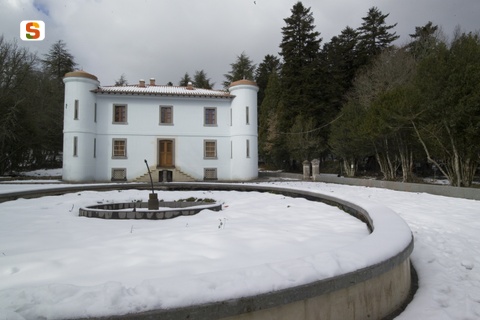
Villa Piercy, foresta di Badde Salighes photo by Manunza Bruno http://www.sardegnadigitallibrary.it/index.php?xsl=626&id=250435


In contrast, Dylan and the television crew from the production company Unigryw, were invited to a ceremony on an estate in Sardinia – where a country  mansion is now a museum to remember the Welshman.

Further chances to see the programme will be at 11:30pm on October 14 in an audio signed version, and at 10:45 pm on October 25. It is also available online on demand for some 30 days.

or here

Article by Barry Jones first appeared in County Times magazine on Saturday 14th October 2017. barry.jones@nwn.co.uk


Inside an Ancient Pagan Ritual That Makes Men Become Monsters

article by Austa Somvichian-Clausen first appeared 6th October 2017 on National Geographic Magazine.


mamoiada1
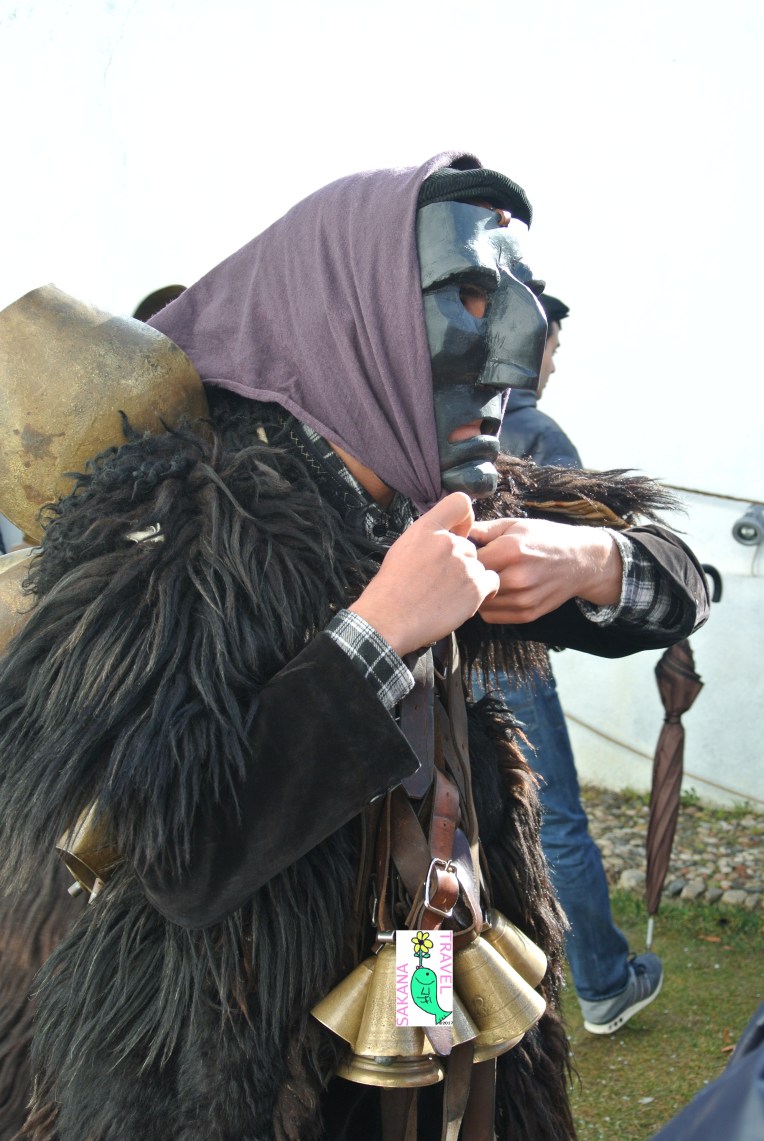
Mamuthones Mask in Mamoiada photo by F.Fenu 2017


An ancient ceremony in the heart of a wild country celebrates the rebirth of spring.

A mysterious, ancient tradition takes place each year in Mamoiada, a small village tucked into the middle of wild and mountainous Sardinia.

On the day of Saint Anthony, the saint protector of animals and fire, the men of the village transform to become Mamuthones and Issohadores. Complementing one another like yin is to yang, mamuthones echo the darkness, while issohadores rope in the light.
Bonfires roar across not only the village, but all of Sardinia in observance of the holiday. One of the most popular festival days in the country, the occasion is meant to banish the cold chill of winter in exchange for the sweeter invitation of spring. It is on that day that the villagers of Mamoiada share their uniquely haunting procession of song, dance, and solemnity.
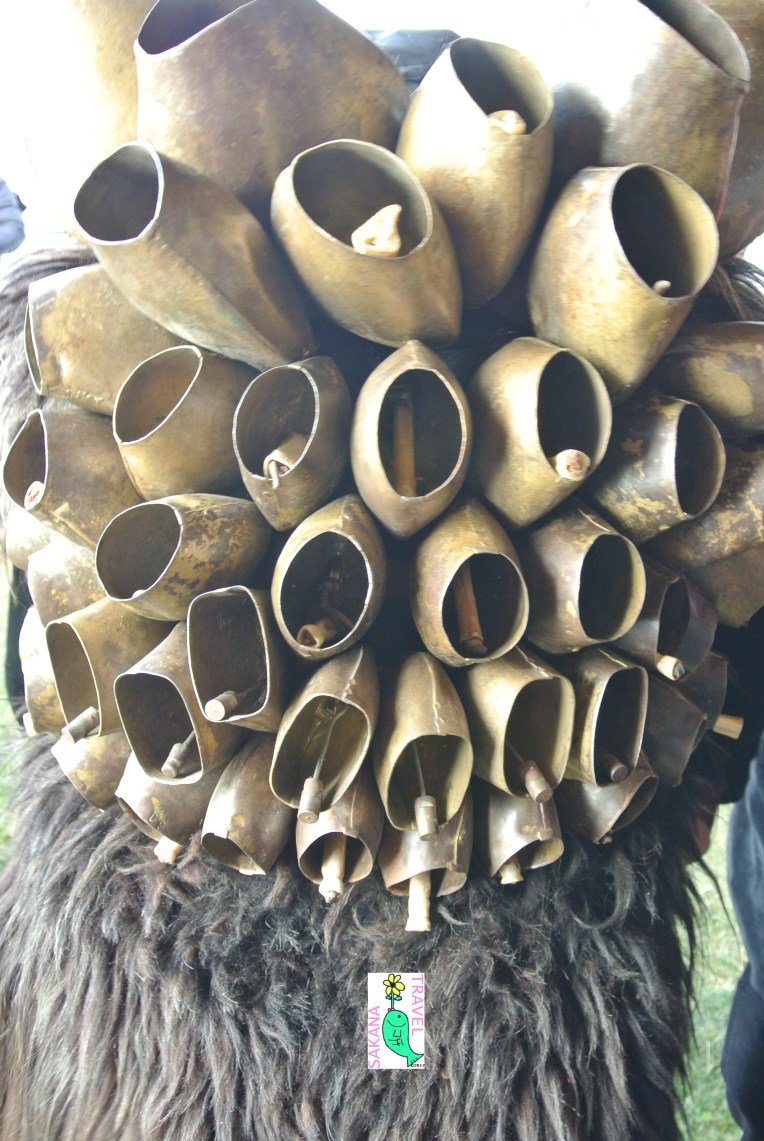
The stars of the show, the Mamuthones, represent the inhabitants of the kingdom of the dead, as well as the shepherd’s strong connection between man and his beasts. They don anthropomorphic, grotesque masks created by local artisans—accentuated by jutting features and slick black paint. Heavy copper cowbells sewn onto thick straps of leather hang tightly from their backs like tortoise shells, threatening to drag their bodies to the ground. Thin hoods of fabric drape over their heads, and darkly colored sheep pelts hide their shoulders, backs, and torsos.
In contrast, Issohadores parade around in red tunics and black bandoliers, a bell-adorned sash hanging across their bodies.
The procession begins in front of the largest church in the village. Led by an Issohadore, twelve Mamuthones begin their solemn, rhythmic pace forward. Lurching under the weight of up to 60 pounds of copper bells, they do not pay the public any attention.


mamoiada
Mamhutone traditional Copper Bells photo by F.Fenu 2017


Lively issohadores twirl thin reed ropes, catching young women in the crowd. They continue like this from early afternoon until late evening, until each of the bonfires in the village have been reached.
Dating back over two thousand years, the true origin of the pre-Christian tradition is heavily disputed by scholars. Some argue that it dates back to the indigenous Nuragic civilization and was originally intended as a gesture of reverence for animals, and to serve as protection from evil spirits.

Filmmaker Andrea Pecora (short film) feels a deep connection to these traditions thanks to Sardinian ancestry on his mother’s side. He hopes to share Sardinian culture with the world and says experiencing the tradition of the mamuthones was especially meaningful.
“The tension was clearly visible in the men’s eyes, and the creeping fire and holy atmosphere was something magical,” says Pecora. “I hope I’ve captured all of this into my work.”

The last surviving sea silk seamstress

Article by Eliot Stein first appeared on BBC Travel Magazine 6th September 2017

Byssus, or sea silk, is one of the most coveted materials in the world – but after more than 1,000 years in the same matrilineal family tree, this ancient thread may soon unravel.


p05ddf7x
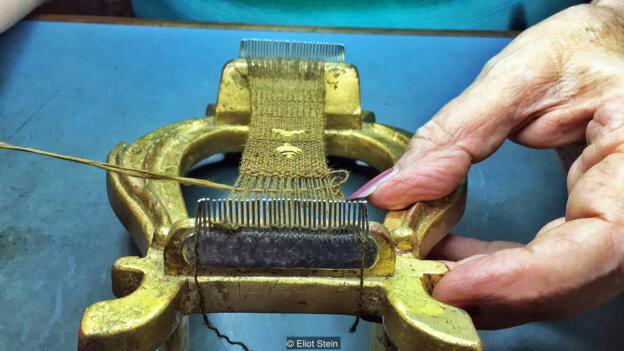
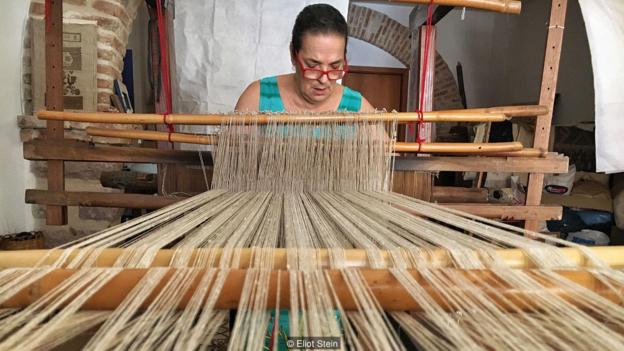
The loom Chiara Vigo weaves on has been in her family for more than 200 years (credit Eliot Stein)


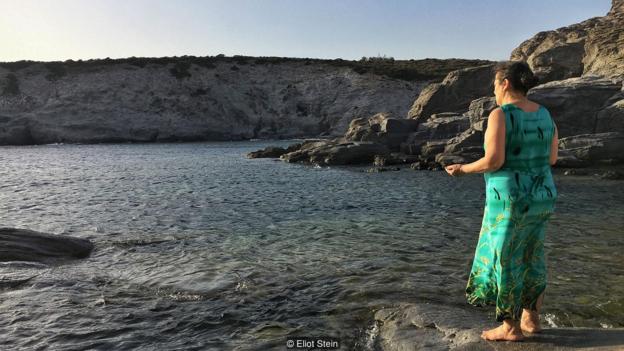
Each spring, under the cover of darkness and guarded by members of the Italian Coast Guard, 62-year-old Chiara Vigo slips on a white tunic, recites a prayer and plunges headfirst into the crystalline sea off the tiny Sardinian island of Sant’Antioco.

Using the moonlight to guide her, Vigo descends up to 15m below the surface to reach a series of secluded underwater coves and grassy lagoons that the women in her family have kept secret for the past 24 generations. She then uses a tiny scalpel to carefully trim the razor-thin fibres growing from the tips of a highly endangered Mediterranean clam known as the noble pen shell, or pinna nobilis.


p05dddrw
Chiara Vigo prays twice a day facing the sea, once at dawn and again at dusk (credit Eliot Stein)


It takes about 100 dives to harvest 30g of usable strands, which form when the mollusc’s secreted saliva comes in contact with salt water and solidifies into keratin. Only then is Vigo ready to begin cleaning, spinning and weaving the delicate threads. Known as byssus, or sea silk, it’s one of the rarest and most coveted materials in the world.

Today, Vigo is believed to be the last person on Earth who still knows how to harvest, dye and embroider sea silk into elaborate patterns that glisten like gold in the sunlight.


Chiara Vigo has an encyclopedic knowledge of 124 different natural dye variations (credit Eliot Stein)


Women in Mesopotamia used the exceptionally light fabric to embroider clothes for their kings some 5,000 years ago. It was harvested to make robes for King Solomon, bracelets for Nefertiti, and holy vestments for priests, popes and pharaohs. It’s referenced on the Rosetta Stone, mentioned 45 times in the Old Testament and thought to be the material that God commanded Moses to drape on the altar in the Tabernacle.


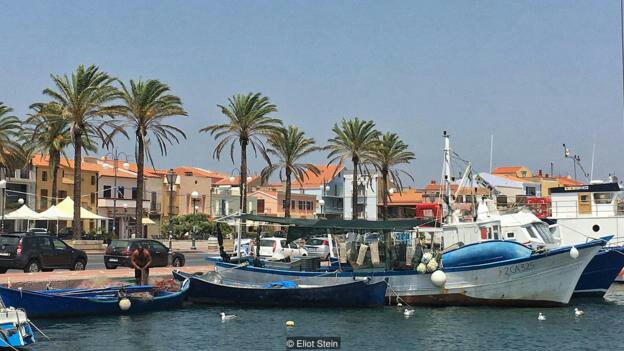
Sant’Antioco is a quite, salty fishing town on an island of the same name (credit : Eliot Stein)


No-one is precisely sure how or why the women in Vigo’s family started weaving byssus, but for more than 1,000 years, the intricate techniques, patterns and dying formulas of sea silk have been passed down through this astonishing thread of women – each of whom has guarded the secrets tightly before teaching them to their daughters, nieces or granddaughters

After an invitation to visit Vigo’s one-room studio, I suddenly found myself face-to-face with the last surviving sea silk seamstress, watching her magically spin solidified clam spit into gold.


Sea silk comes from thin fibres growing from the tips of a highly endangered Mediterranean clam (Credit Eliot Stein)


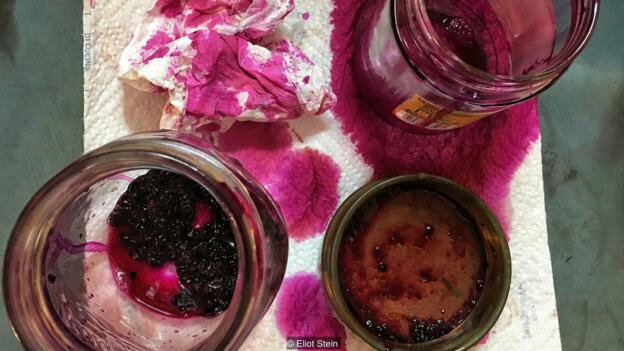
I slowly approached the small wooden table where Vigo worked, walking past a 200-year-old loom, glass jars filled with murky indigo and amber potions and a certificate confirming her highest order of knighthood from the Italian Republic cast aside on the floor.

If you want to enter my world, I’ll show it to you,” she smiled. “But you’d have to stay here for a lifetime to understand it.”

Vigo learned the ancient craft from her maternal grandmother, who taught traditional wool weaving techniques on manual looms to the women of Sant’Antioco for 60 years. She remembers her grandmother paddling her into the ocean in a rowboat to teach her to dive when she was three years old. By age 12, she sat atop a pillow, weaving at the loom.


Chiara Vigo uses her fingernails and a nail to embroider a small piece of sea silk cloth (Credit: Eliot Stein)


“My grandmother wove in me a tapestry that was impossible to unwind” Vigo said. “Since then, I’ve dedicated my life to the sea, just as those who have come before me.”

Vigo is known as su maistu (‘the master’, in Sardo). There can only be one maistu at a time, and in order to become one, you must devote your life to learning the techniques from the existing master. Like the 23 women before her, Vigo has never made a penny from her work. She is bound by a sacred ‘Sea Oath’ that maintains that byssus should never be bought or sold.

In fact, despite weaving works for display in the Louvre, the British Museum and the Vatican, Vigo doesn’t have a single piece of byssus in her home. She lives in a modest apartment with her husband, and they live off his pension as a coal miner and donations from visitors who stop by Vigo’s studio.


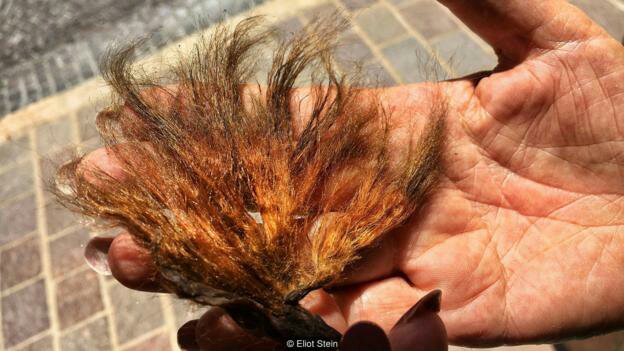
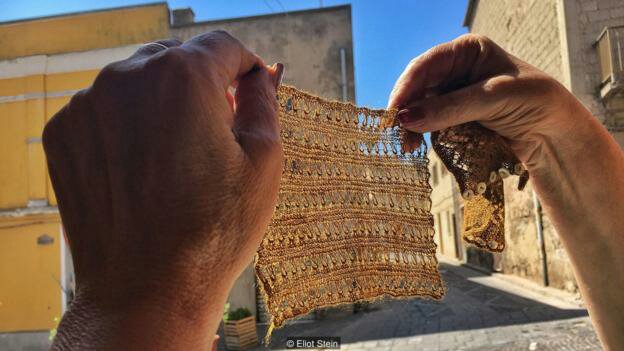
When held into the light, sea silk transforms from a brownish colour into a golden hue (Credit Eliot Stein)


Instead, Vigo explained that the only way to receive byssus is as a gift. She’s created pieces for Pope Benedict XVI and the Queen of Denmark, but more often than not she embroiders designs for newlywed couples, children celebrating a christening and women who come to her in hopes of becoming pregnant.

Byssus doesn’t belong to me, but to everyone,” Vigo asserted. “Selling it would be like trying to profit from the sun or the tides.”

But that hasn’t stopped people from trying. According to Małgorzata Biniecka, author of The Masters of Byssus, Silk and Linen, until the 1930s the only other place besides Sant’Antioco where the tradition of sea silk harvesting and embroidering continued was the city of Taranto, Italy.

“A woman there forsake the Sea Oath and tried to establish a commercial byssus industry,” Biniecka said. “A year later, it went bankrupt and she mysteriously died.”

More recently, a Japanese businessman approached Vigo with an offer to purchase her most famous piece, ‘The Lion of Women’, for €2.5 million. It took Vigo four years to stitch the glimmering 45x45cm design with her fingernails, and she dedicated it to women everywhere.

I told him, ‘Absolutely not’,” she declared. “The women of the world are not for sale.”

Neither is the painstaking process behind her pieces, which she slowly revealed during my four-day visit.

After harvesting raw byssus from the depths of the sea, she desalts the fibres by submerging them in fresh water for 25 days, changing the water every three hours. Once they dry, she cleans the threads with a carding brush to remove any remaining sediment.

Then comes the hardest part: separating each strand of pure sea silk from the tangle of raw byssus. Because sea silk is three times finer than a strand of human hair, Vigo peers through a lamp with a magnifying glass as she delicately plucks each thread of silk using a pair of tweezers.

“It may seem easy now,” she said. “But my fingers have been practicing this for 50 years.”

On several occasions after Vigo extracted a thick tuft of fibres, she ordered me to close my eyes and extend my hand. Each time I felt nothing. After about 10 seconds, I’d open my eyes to see Vigo rolling a weightless cloud of sea silk back and forth on my palm.

Next, she twists the silk manually around a small wooden spindle, usually singing in Sardo – the closest living form of Latin – during the process. When the fibres form a long thread, she grabs a jar of cloudy yellowish liquid from the shelf.

“Now, we’ll enter a magical realm,” she said, dropping the thin thread into a secret concoction of lemon, spices and 15 different types of algae. Within seconds, the thread becomes elastic and she excitedly ushered me outside to show how it shimmered in the sunlight. Vigo has an encyclopaedic knowledge of 124 natural dye variations made from fruits, flowers and seashells.

Finally, Vigo intertwines the spun silk into the linen warp using her fingernails. It takes 15 straight days of extracting and dying raw byssus to create enough threads to weave just a few centimetres. Some pieces, like a 50x60cm cloth of pure sea silk weighing just 2g, take six years to stitch. Others, like the larger tapestries draped atop her loom depicting Biblical passages and pagan deities, take even longer.

“There are 140 patterns in my family, eight of which will never be written and have been passed down orally from generation to generation,” she said.

But after more than 1,000 years in the same matrilineal family tree, this ancient thread may soon unravel.

According to tradition, the heir to the byssus secrets is Vigo’s youngest daughter, Maddalena. Like her own grandmother, Vigo began teaching her how to dive and embroider at an early age

The only thing she’s missing is the formulas for the dye potions,” Vigo told me.

But there’s a problem: “My mother and I are very different,” Maddalena said from her home in Dublin, Ireland, where she’s been living for the past two years. “People have always told me that I’d be a fool to allow this art to die, but I’m desperately torn. My life is mine.”

What’s more, after creating the world’s only museum dedicated to byssus in 2005, Vigo awoke one day last autumn to find that the government of Sant’Antioco had unexpectedly closed her free Museo del Bisso, citing that the building’s electrical system wasn’t up to code.

“The ‘electrical problem’ was me!” Vigo snapped. “The municipality tried to force me to charge entrance fees and write down my patterns and secrets. But I will defend this sacred oath with my fingernails as long as I breathe!”

The news drew national attention, spurring an online petition that garnered nearly 20,000 signatures – including that of the President of Sardinia – to no avail.

Recently, two young artists started a crowdfunding campaign to help Vigo rent the one-room studio where she now works. Ironically, it’s the same room where Vigo’s grandmother taught her how to spin sea silk 50 years ago. Unless they can raise €85,000 to purchase the rent-to-own property by November 2018, the town will evict her and the world will no longer be able to watch its last sea silk seamstress spin byssus into gold.

On my last evening with Vigo, she led me to a secluded cove where women in her family have prayed for as long as she can remember. As the sun melted into the sea, she stood at the edge of a tidal pool, closed her eyes and began a mystical, almost shamanic chant.

She then reached deep into a bag, pulled out a clump of 300-year-old byssus from a vial, and spun a long thread of sea silk.

“The secrets may die with me,” she said, tying the thread around my wrist. “But the silk of the sea will live on.”

Article by Eliot Stein first appeared on BBC Travel Magazine 6th September 2017

http://www.bbc.com/travel/story/20170906-the-last-surviving-sea-silk-seamstress